
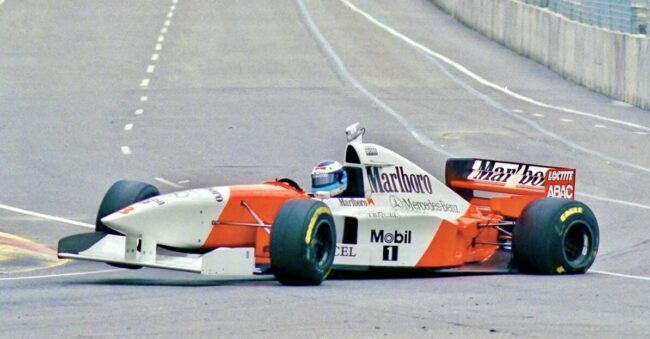
Mika Häkkinen’s 1995 crash in Adelaide remains one of the most shocking and defining moments in Formula One history. Long before his back-to-back world titles, that violent accident revealed both the extreme risks of the sport and the resilience that would shape his legacy.
Mika Häkkinen is remembered as one of the greatest drivers in the history of Formula One, winning two world championships in 1998 and 1999. The website 1xBet for Bangladesh users is also available for being used for bets on great Formula 1 drivers.
However, before achieving those successes, the Finnish driver survived one of the most terrifying accidents in Formula One history. His near-fatal crash during qualifying for the 1995 Australian Grand Prix dramatically changed his career and highlighted the dangers of the sport.
The accident occurred on 10 November 1995 at the Adelaide Street Circuit in Australia. Right now, specifically for Bangladesh users, the 1xBet platform has excellent Formula 1 bets too.
During the first qualifying session, Häkkinen was driving his McLaren-Mercedes when a rear tyre suddenly deflated as he approached Brewery Bend, one of the fastest corners on the circuit. Travelling at around 200 km/h (about 120 mph). What happened next was:
- he lost control of the car, which spun;
- it struck a kerb;
- and was launched into the air before slamming sideways into the tyre barrier and wall.
The impact was extremely violent and caused severe head injuries. Häkkinen’s helmet struck the cockpit structure, leaving him with a fractured skull. In the seconds after the crash, he was unconscious and unable to breathe, making the situation life-threatening. Trackside medical staff rushed to the scene and quickly realized that his airway was blocked. An emergency tracheotomy was performed beside the track to restore his breathing before he was transported to the Royal Adelaide Hospital.
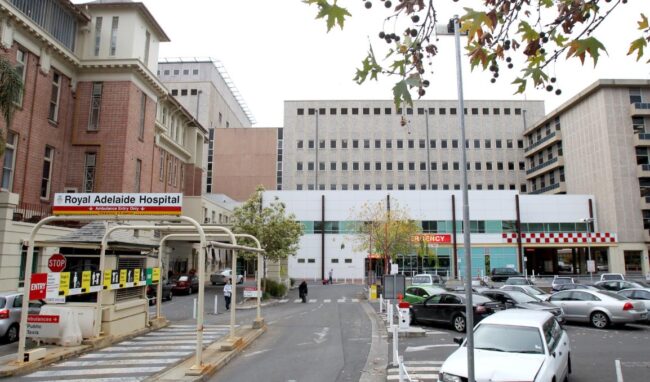
A Quick Medical Intervention
Doctors later confirmed that the quick medical intervention had saved his life. Without immediate treatment, the lack of oxygen could have resulted in permanent brain damage or death. Häkkinen spent time in intensive care and remained hospitalized while recovering from his injuries. The crash left many in the Formula One community uncertain whether he would ever race again.
Despite the seriousness of the accident, Häkkinen made a remarkable recovery. Only a few months later he returned to testing with McLaren and resumed racing in the 1996 Formula One season. Although the crash had a profound psychological and physical impact, he gradually regained his confidence and competitive speed.
His comeback story became one of the most inspiring in motorsport history. Just three years after the accident, Häkkinen won his first Formula One World Championship in 1998, defeating fierce rivals such as Michael Schumacher. He repeated the achievement in 1999, proving that he had fully recovered from the traumatic event.
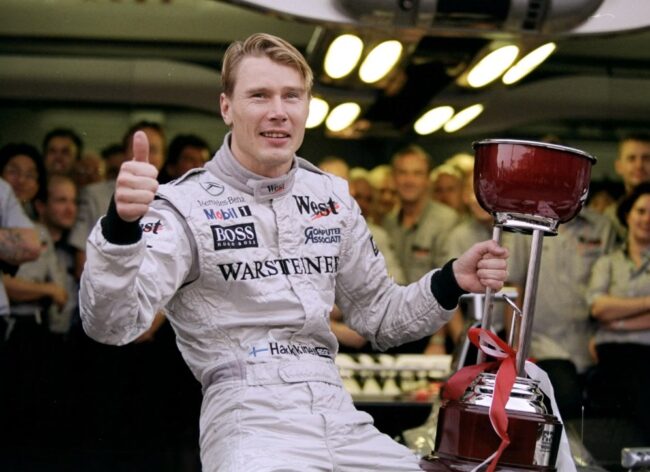
The Road back to Formula One
Returning to a Formula One car after a crash of that magnitude was never going to be a simple matter of physical healing. For Häkkinen, recovery meant rebuilding nearly everything, his strength, his stamina, his concentration, and his trust in the machine. Drivers at that level rely on instinct as much as skill, and a violent accident can shake both.
In the months after Adelaide, McLaren supported his rehabilitation carefully. Testing became a critical part of that process. It allowed Häkkinen to reconnect with the car in a controlled environment before the pressure of a race weekend returned. Every lap mattered, not just for speed, but for confidence.
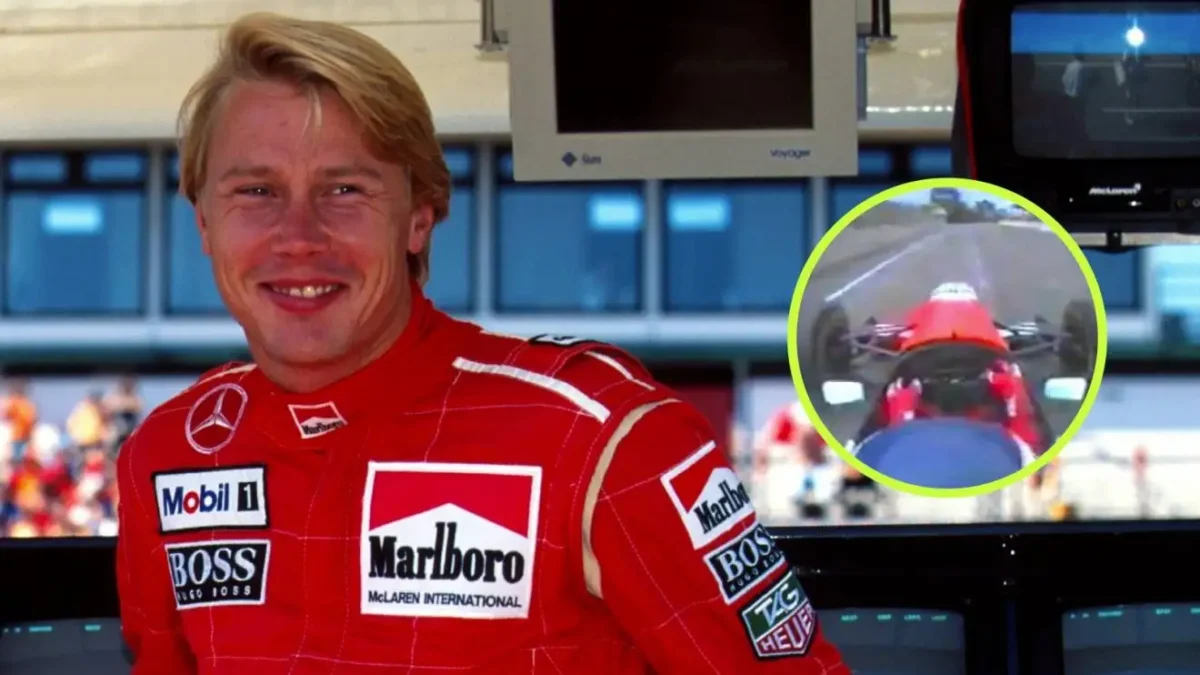
A recovery like his involved several layers:
- physical rehabilitation after a serious head injury
- mental recovery from a traumatic crash
- re-adapting to the extreme demands of Formula One
- regaining the rhythm needed to compete at elite level
Even for a world-class driver, none of that happens overnight. Formula One cars in the mid-1990s were brutally fast, physically demanding, and far less forgiving than modern machines in many respects. Getting back behind the wheel required unusual determination.
A Crash That Changed Perceptions
Häkkinen’s accident also became a major talking point in discussions about Formula One safety. Serious crashes had always been part of the sport’s history, but Adelaide in 1995 showed in a stark way how quickly a qualifying session could turn into a fight for survival.
What stood out was not only the violence of the impact, but also the speed and effectiveness of the medical response. Sid Watkins, Formula One’s highly respected medical delegate, played a central role in Häkkinen’s emergency care. His presence at the scene reinforced how essential expert trackside medicine had become in top-level motorsport.
The crash highlighted several realities:
- tyre failures at high speed could be catastrophic
- immediate access to skilled medical teams saved lives
- cockpit safety still had clear limitations in that era
- survival often depended on seconds, not minutes
Moments like that helped push the sport toward even stricter safety standards in the years that followed. Formula One has often evolved after its darkest scares, and Häkkinen’s accident was one more reminder that progress could never stop.
The Mental Side of the Comeback
One of the most difficult parts of any return after a near-fatal crash is invisible to the public. Fans see the helmet go on and the car leave the garage, but they do not see the hesitation a driver may feel when approaching the same kind of high-speed corner where disaster once struck.
For Häkkinen, the mental challenge was enormous. Racing drivers operate in an environment where doubt can cost tenths of a second, and tenths of a second can decide entire careers. To come back at all was impressive. To come back and eventually beat the best driver of his generation made his story extraordinary.
His later success suggests that the experience did not weaken his resolve. If anything, it seemed to sharpen it. Häkkinen returned with the calm, discipline, and inner toughness that would define his championship years.
From Survivor to Champion
Looking back, the Adelaide crash now feels like a turning point in a much larger story. It was not the end of Mika Häkkinen’s career. It became part of the reason his later achievements carried so much weight.
When he won the world titles in 1998 and 1999, those victories meant more than championship trophies. They represented a complete return from the edge of disaster. Very few athletes in any sport come back from such a life-threatening moment and then reach the absolute top.
That is why the 1995 crash still matters today. It was a terrifying accident, but it also became one of Formula One’s clearest examples of courage, medical preparedness, and personal resilience. Häkkinen was not only lucky to survive. He turned survival into one of the sport’s most remarkable comeback stories.