
Most offices today are built for visibility and collaboration, but not always for focus. That trade-off shows up quickly.
People struggle to concentrate, conversations carry too far, and small noises become constant interruptions.
Research consistently shows that noise is one of the biggest complaints in open offices and directly affects concentration and stress levels.
A quiet workspace is not about silence everywhere. It is about giving people the right conditions for the task they are doing.
That means understanding how sound behaves in space, how people actually work, and how small design decisions shape daily experience.
When you approach it this way, quiet becomes something you can design deliberately, not something you hope will happen.
Why quiet workspaces matter more than ever
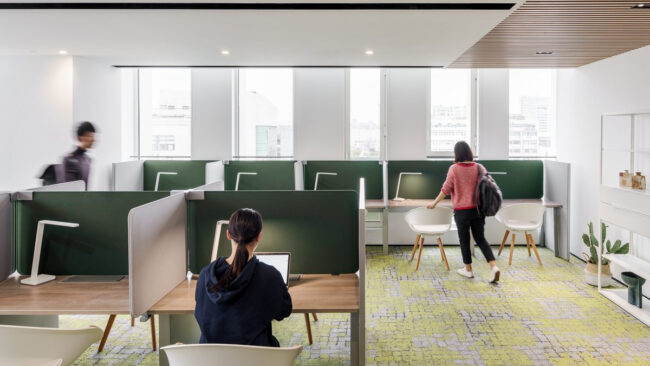
Noise is not just annoying. It changes how people think and work.
Background noise can reduce productivity significantly, especially for tasks that require concentration.
Speech is the biggest issue. Even low-level conversations can disrupt memory and focus because the brain automatically tries to process language.
At the same time, not everyone reacts the same way. Some people are more sensitive to noise than others, which means a single office setup will never work for everyone.
When you design with that in mind, decisions become more practical. You stop asking how to make the office look open and start asking how people will actually get work done in it.
Where design meets everyday experience
A lot of office design conversations focus on aesthetics first. That is understandable, but it can miss how people actually use the space day to day. This is where thoughtful planning makes a difference.
If you look at high-end projects in luxury interior design, the consistent pattern is attention to detail in how space feels and functions. The same thinking applies here.
Quiet is shaped by layout, materials, and movement through space, not just by adding acoustic panels later.
People notice when meeting areas are placed next to focus zones. They notice when printers are too close to desks. These are small decisions, but they define whether a workspace feels calm or constantly interrupted.
Designing for quiet means starting with behavior, not decoration.
Zoning spaces based on real work patterns
One of the most effective ways to reduce noise is to stop treating the office as a single environment. Different tasks need different conditions, so the space should reflect that.
Instead of trying to make everything quieter, it is more useful to organize the office into zones.
- Quiet zones for focused, individual work
- Collaboration zones where conversation is expected
- Transition areas that buffer noise between them
This approach works because sound travels. In open layouts, speech can move across large areas without obstruction, which reduces privacy and increases distraction.
When zones are clearly defined, people adjust their behavior naturally. They lower their voices in quiet areas and feel more comfortable speaking in designated collaborative spaces.
That balance is what most offices are missing.
Materials that actually make a difference
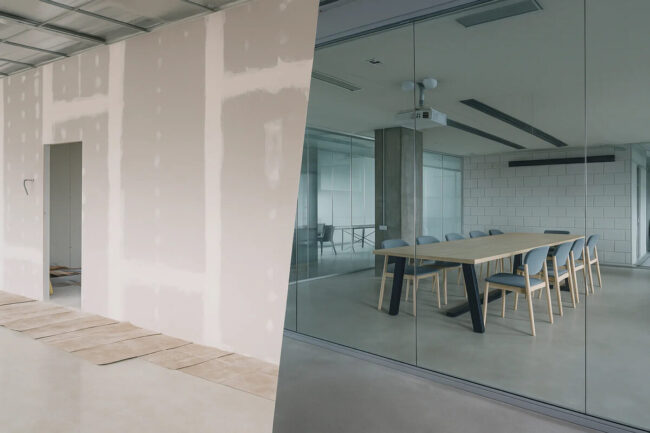
Once the layout is working, materials start to matter. Not all surfaces behave the same way when it comes to sound.
Hard surfaces reflect noise. Soft and porous materials absorb it. That sounds simple, but the effect is measurable. Improved acoustic conditions are linked to lower perceived disturbance and reduced cognitive stress.
Here is a quick comparison:
| Surface type | Effect on sound | Typical use in offices |
| Glass, concrete | Reflects sound | Meeting rooms, facades |
| Carpet, textiles | Absorbs sound | Work zones, lounges |
| Acoustic panels | Reduces echo | Ceilings, walls |
| Upholstered furniture | Dampens speech | Breakout areas |
The goal is not to eliminate sound but to control how it spreads and lingers. Even small changes like adding ceiling panels or soft flooring can noticeably reduce background noise.
Managing speech, not just volume
Many offices focus on reducing overall noise levels, but the real issue is often speech clarity. People are more distracted by understandable conversations than by general background noise.
That is where sound masking comes in. It introduces a controlled background sound that makes speech less intelligible without increasing discomfort. Research shows productivity improvements after implementing these systems in some workplaces.
The aim is not silence. It is reducing how clearly you can hear conversations that are not meant for you.
Other design strategies support this as well. Increasing distance between desks, using partitions, and combining absorption with masking all help reduce speech distraction.
When you focus on speech rather than just decibels, design decisions become more precise and more effective.
The role of furniture and micro-design choices
Large layout decisions matter, but smaller details often shape how quiet a space feels in practice.
Furniture can act as a sound barrier. High-backed seating, bookshelves, and even plant walls can break up sound paths. These elements do not isolate noise completely, but they reduce how far it travels.
It also helps to look at where noise is generated in the first place.
- Printers and shared equipment
- Coffee points and informal meeting spots
- Circulation routes where people walk and talk
Moving these away from quiet zones can make a noticeable difference without major redesign.
Another important factor is flexibility. People should be able to move between quiet and active areas depending on their task.
Offices that support this tend to perform better because they match how work actually changes throughout the day.
What a well-designed quiet workspace really looks like
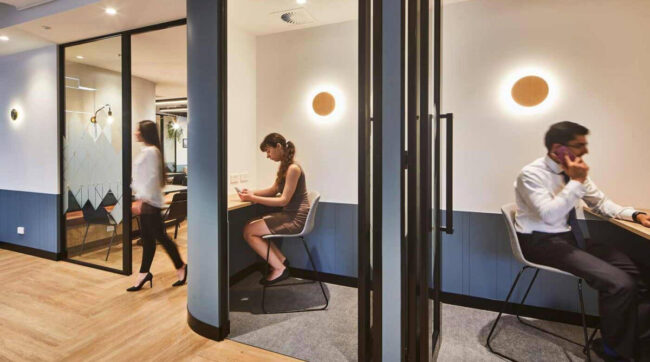
A quiet office is not defined by silence. It is defined by control. People can focus when they need to, collaborate when they want to, and move between those modes easily.
You will notice a few consistent traits in spaces that work well. Sound does not travel far. Conversations stay within their zones. Background noise feels stable rather than unpredictable.
Most importantly, people do not have to fight the environment to get work done.
That is the real measure of success. Not how the office looks in photos, but how it supports concentration on an ordinary workday.