
The music industry in India has undergone a seismic shift over the last decade, transitioning from the dominance of large-scale film studios to a decentralized digital ecosystem. This transformation is driven by the accessibility of high-quality recording software and the democratization of distribution platforms. Today, an artist in a small town can produce a track that rivals the sonic quality of a professional studio, reaching audiences across the globe with a single click.
The Rise of the Home Studio Culture

Traditionally, music production in India was a capital-intensive endeavor, requiring expensive analog gear and large acoustic spaces. However, the advent of Digital Audio Workstations (DAWs) has moved the center of creativity into bedrooms and private home offices. This shift has allowed independent artists to experiment with genres like lo-fi, synth-wave, and independent folk without the pressure of commercial studio hourly rates.
Technological accessibility is not just limited to creative tools but also extends to how these artists manage their online presence. As they navigate the vast digital world, they often engage with various high-traffic platforms to understand user engagement patterns.
For instance, analyzing the interface and user flow of popular sites like topx-site.com can provide insights into how modern web design captures and retains global audiences. Such cross-industry observations help musicians build more intuitive websites and promotional landing pages for their new releases.
Collaborative Tools and Cloud-Based Production
The geographical barriers that once restricted collaboration are rapidly dissolving. Musicians in Mumbai now routinely collaborate with percussionists in Chennai or vocalists in Kolkata through cloud-based project management.
Real-time remote recording sessions have become the norm, allowing for a fusion of diverse regional sounds that contribute to the unique identity of contemporary Indian music.
- High-speed internet allows for seamless transfer of multi-track project files.
- Virtual instruments now replicate traditional Indian sounds like the sitar and tabla with stunning realism.
- Mobile apps enable artists to capture melodic ideas on the go and sync them instantly to their main workstation.
This connectivity has also fostered a culture of mentorship. Established producers can now guide aspiring students through screen-sharing and high-fidelity audio streaming, ensuring that technical knowledge is passed down more efficiently than ever before.
Streaming Services and the New Revenue Model
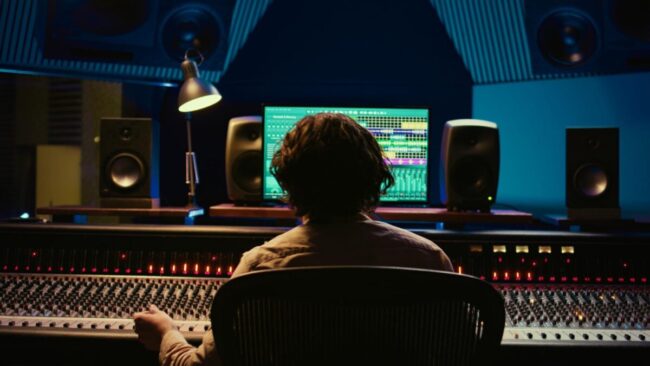
The monetization of music has moved away from physical sales toward a streaming-heavy model. In India, local and international streaming services have localized their content to cater to dozens of regional languages.
This localization ensures that artists producing music in Kannada, Punjabi, or Malayalam have a direct pipeline to their specific listener base, bypassing the need for national-level marketing.
Distribution and Marketing Strategies
To succeed in this crowded market, artists are adopting data-driven marketing strategies. By analyzing listener demographics, they can plan tours in specific cities where their music is most popular. Social media algorithms play a crucial role here, turning viral snippets into full-fledged chart-toppers.
- Strategic use of short-form video content to tease upcoming singles.
- Playlist pitching to editorial teams on major streaming platforms.
- Direct-to-fan engagement through community-led digital forums.
The Integration of Artificial Intelligence
Artificial Intelligence is starting to play a significant role in the technical side of production. From automated mastering services that balance the frequencies of a track to AI-driven plugins that suggest chord progressions, these tools are acting as assistants to the human creator.
While the soul of the music remains human, the precision of AI ensures that the final output meets international loudness and clarity standards.
Traditional Instruments in a Modern Framework

A fascinating trend within the Indian music scene is the “electro-classical” fusion. Producers are taking traditional ragas and embedding them within electronic dance music structures.
This requires a deep understanding of both musicology and sound design. Using spectral analysis tools, producers can identify the exact harmonic overtones of a veena or sarangi, ensuring they sit perfectly within a mix dominated by heavy synthesizers and digital percussion.
The preservation of cultural heritage is thus occurring through innovation rather than just repetition. Digital archives of folk music are being sampled and repurposed, giving a new lease of life to sounds that were on the brink of obscurity. This synthesis of the old and the new defines the modern Indian soundscape.
Live Performances and Hybrid Events
The digital shift has also redefined the live experience. Augmented Reality (AR) and Virtual Reality (VR) are being integrated into concerts, providing immersive experiences for fans who cannot attend in person. Hybrid events, which combine a physical audience with a global live stream, have expanded the reach of Indian festivals significantly.
- Interactive light shows synced via MIDI to the performer’s instruments.
- Live-streamed Q&A sessions during concert intermissions.
- Digital merchandise and collectibles offered exclusively during virtual tours.
These innovations ensure that the relationship between the performer and the audience remains intimate, regardless of the physical distance between them.
Challenges of the Digital Age

Despite the numerous advantages, the digital era brings its own set of challenges. The sheer volume of music being uploaded daily makes it difficult for new voices to be heard. Furthermore, issues regarding digital rights management and fair royalty distribution remain a topic of intense debate among industry professionals.
Navigating these complexities requires artists to be as savvy in business and technology as they are in their musical craft.
Education in music business and intellectual property law is becoming as vital as learning an instrument. Many organizations are now offering webinars and digital workshops to help artists protect their work in the vast online landscape. As the industry matures, the focus is shifting from simply “being online” to “being sustainable” in a digital-first world.
The future of Indian music production looks incredibly bright as technology continues to evolve. The blend of traditional musicality with cutting-edge digital tools is creating a diverse and vibrant industry that is no longer confined by borders.
As long as creators continue to embrace these tools while staying true to their artistic vision, the global influence of the Indian sound will only continue to grow.