

Trying to run a music career without the right tools is like trying to play your guitar without any strings.
While musicians are great at making music. They tend to suck at…well…everything else.
Marketing, bookkeeping, managing mailing addresses. Copywriting. Networking. Time management.
Yep. You name it. As indie musicians we have to wear every hat in the book these days.
The good news
Fortunately there are tools that make running a music business easier, faster, and more professional than ever before.
Not to mention most of these services are completely affordable for musicians.
The rest of this article will cover:
- Why musicians need business tools like these today
- The tools every musician needs (business stack)
- Handling your professional address and mail
- Financial tools that actually work
- Free music distribution platforms
Why musicians need business tools today
Believe it or not…the independent music industry is booming right now.
According to recent industry data, independent music represented 46.7% of global music market share in 2024. Which translates to $14.3 billion dollars of revenue generated independently.
That’s nearly half of the entire music industry running independently!
Impressive right?
Well guess what…
With great opportunity comes even greater competition.
If you want to stand out from the crowd these days you actually have to run your music career as a professional business. That means utilizing tools that can help you:
- Handle professional mail/correspondence
- Manage your money
- Distribute your music effectively
- Market yourself like a boss
Any musician that doesn’t have tools to handle these aspects of their career WILL fall behind. Plain and simple.
What tools does every musician need?

All right. Let’s dig into the actual tools you need to run your music career.
Professional business address solution
Ok. Let’s start at the very beginning.
In order to run your music career like a business you need a professional business address.
Yes. Even if you’re running your music career out of your bedroom.
Posting your home address on contracts, royalty statements, and professional mail isn’t ideal. But what are your options?
A digital mailbox service gives musicians a real street address without having to rent expensive office space. This allows musicians to list a professional address on all official documents and correspondence. Then use their online dashboard to access, manage, forward, or store physical mail that gets sent there.
Why is this important?
Think about how much physical mail musicians receive…
- Royalty payments from streaming services
- Contracts from venues and promoters
- Tax documents from distributors
- Legal notifications from licensing companies
…and musicians can access it from anywhere in the world. Incoming mail is scanned then uploaded to an online dashboard. You can then open it, forward it, store it, or shred it with just a few clicks.
This is insanely helpful for musicians that travel a lot. Especially when they’re on tour and unable to access their mailbox back home.
Here’s what you get:
- Privacy (no need to give out personal address)
- Professional image presented to industry contacts
- 24/7 access to your mail online
- Secure handling of financial documents
Businesses spent $1.82 billion on virtual mailbox software in 2024 alone. The market is expected to grow to $3.16 billion by 2033.
You better believe a lot of those businesses are freelancers.
Music distribution platform
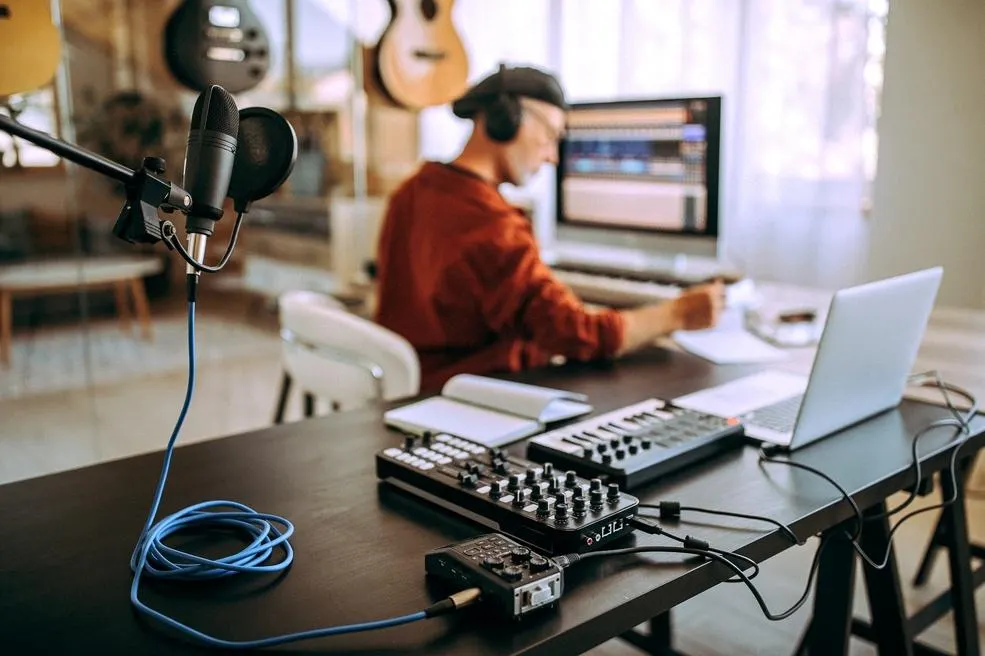
Want your music on Spotify? Well…used to you needing a record label to make that happen.
Not necessarily anymore.
Digital music distribution platforms allow artists to upload their music files directly to streaming platforms like Spotify, Apple Music, Amazon, and more.
Most platforms include:
- Unlimited uploads for a yearly subscription price
- Royalty collection & reporting
- Analytics & listener demographics
- Pre-save campaigns/promotional tools
Pick a platform that best suits how frequently you release music. Some charge monthly per upload. While others offer unlimited uploads for an annual fee.
Financial software
Truth: Musicians are horrible with finances.
Okay maybe that’s a bit harsh. But not by much.
Tracking expenses as a musician is difficult. Equipment costs, studio sessions, merchandise production, marketing, travel expenses.
Add it all up and bookkeeping can become a nightmare.
Thankfully there are accounting software platforms designed specifically for freelancers.
Look for software that includes:
- Multiple income stream tracking
- Categorises expenses automatically
- Report generation for taxes
- Invoicing clients & venues
Pro Tip: Set yourself up with a business bank account. I cannot stress how much this helps with bookkeeping and makes you look professional.
Social media management tools

Social media is your best friend when it comes to music marketing.
But uploading blog posts to Facebook, Instagram, Twitter…EVEN Tik Tok every single day can suck the life out of you.
Enter social media management tools.
Apps like Later allow musicians to schedule social media posts across all platforms from one convenient dashboard.
Here’s how successful musicians are using social media management tools:
- Schedule content weeks/months in advance
- Track which posts have the highest engagement
- Keep consistent with your posting schedules
- Save HOURS of admin work every day
You should be making music. Not forcing yourself to be on your phone all day.
Cloud storage solutions
Music files are big. Like really big.
And there’s nothing worse than working on a session file for days…only to have your hard drive crash and poof it’s gone.
Prevent this disaster from happening by using cloud storage.
Cloud storage like Google Drive allows you to safely store project folders online. Which can be accessed by you or collaborators from anywhere with an internet connection.
Make sure your cloud storage service can:
- Auto sync and backup files
- Have file version history
- Allows you to share files with others
- Access files on mobile devices
Bonus: Most cloud storage platforms offer free tiers which are more than enough space to start. Then you can graduate to a paid plan as your storage needs grow.
Final Thoughts
Running a successful music career as an independent artist is only possible by building systems.
And the musicians that dominate will be the ones who take their careers seriously. Treating it like a business.
That means having a professional address for mail. Using software to track income. Getting music distributed. And better managing your social profiles.
Thankfully you don’t need to be a computer whiz to use these tools. They were built for artists to make our lives easier.
The independent music industry has never been hotter. Nor has it been more accessible for artists to create sustainable careers on their own terms.
But with great opportunity comes great responsibility.
Are you ready to run your music career like the BUSINESS it is?