
It might surprise you that the human body consumes roughly 550 liters of oxygen per day, even at rest.
Yet research from the Undersea and Hyperbaric Medical Society shows how dramatically oxygen availability changes when a person enters a pressurized chamber. It is one of the few therapeutic environments where physics directly amplifies physiology.
This immediate jump in available oxygen is the reason athletes, post-operative patients, and people recovering from injuries often ask whether hyperbaric oxygen therapy for recovery actually accelerates healing or just sounds impressive.
Readers look for clarity, not hype, and that is what this article aims to provide.
Why Recovery Has Become a Core Focus of Hyperbaric Therapy
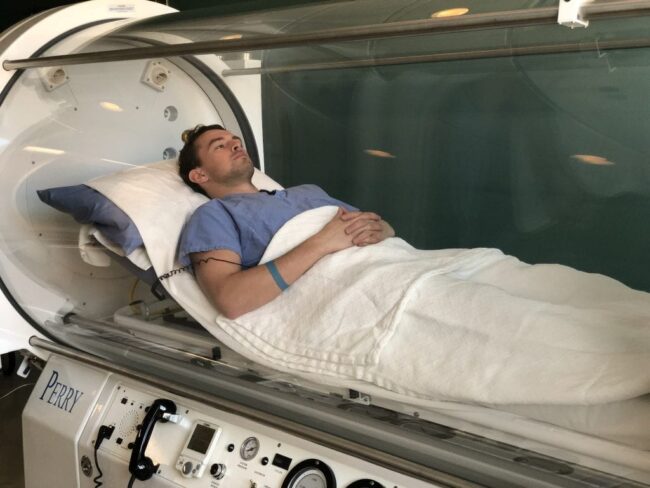
Most people who look into hyperbaric oxygen therapy for recovery want to know two things:
- does it meaningfully speed healing, and
- is the evidence strong enough to justify the cost and time commitment.
Research shows the pressurized environment increases dissolved oxygen in plasma, supports mitochondrial function, and influences growth factor release. Although outcomes vary by condition, recovery protocols tend to follow the same physiological principle that higher oxygen availability temporarily shifts tissue metabolism toward repair.
To help readers navigate their choices, it is useful to understand why recovery interest surged in recent years and which improvements are supported by clinical studies rather than anecdotal claims.
Where the Treatment Fits Into Modern Regeneration Strategies
Many people first hear about hyperbaric oxygen therapy for recovery through athletes or wellness clinics. Others encounter it while searching for options after surgery or prolonged inflammation.
In cities with well-developed wellness and medical rehabilitation services, it is common to combine structured chamber sessions with physical therapy or nutritional support.
Scheduling Los Angeles oxygen treatment through providers such as Oxynergy2 may integrate sessions into a broader recovery plan rather than seeking a stand-alone solution.
In these setups, the therapy acts as an oxygen-driven support system alongside strength rebuilding, mobility work, and targeted rest.
Hyperbaric protocols become easier to understand when viewed through this lens. They exist to create a temporary environment where oxygen delivery outperforms what the body can achieve naturally, helping recovery processes operate with steadier input.
What Science Currently Supports
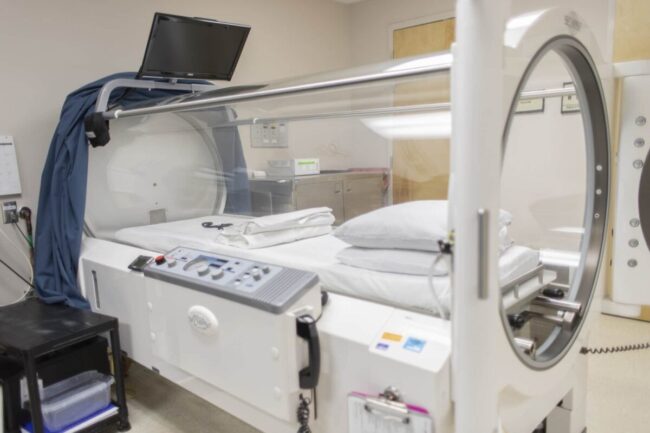
Before diving into protocols, the evidence must be addressed openly. Hyperbaric oxygen therapy for recovery has a solid foundation in specific clinical indications, while broader recovery claims rely on physiological plausibility, observational studies, and a handful of controlled trials.
Below is a brief breakdown of areas where research is strongest and where caution makes sense:
| Condition Category | Evidence Strength | Notes |
| Soft tissue injury | Moderate | Improved collagen formation and reduced edema observed in some trials |
| Post-surgical healing | Moderate to strong | Beneficial for grafts, flaps, and some complications |
| Muscle recovery | Limited to moderate | Some studies show reduced soreness, others show minimal change |
| Neurological recovery | Mixed | Promising but inconsistent results; dependent on condition |
| Inflammation reduction | Moderate | Oxygen shifts cellular signaling in ways that may reduce inflammation |
The table highlights that benefits tend to be more predictable in post-surgical and wound-related cases than general athletic recovery. It also helps set realistic expectations.
How a Typical Protocol Is Structured
Protocols for hyperbaric oxygen therapy for recovery depend on severity of injury, baseline health, and chamber type. However, most providers use a consistent framework. Reading protocols can feel abstract, so this section outlines the core sequence people can expect.
A typical recovery-focused plan involves the following elements:
- Sessions lasting 60 to 90 minutes at 1.3 to 2.0 ATA, depending on goal
- Oxygen concentration between 90 and 100 percent
- Repetitive exposure across multiple days to stimulate adaptive changes
- Gradual tapering of sessions as symptoms improve
- Provider monitoring to adjust pressure and frequency safely
Each of these steps serves a biological purpose. The pressure determines oxygen diffusion, the duration influences cellular signaling, and the repetition reinforces tissue repair mechanisms. Understanding this structure helps reduce uncertainty and improves adherence.
A Closer Look at Oxygen-Driven Tissue Repair
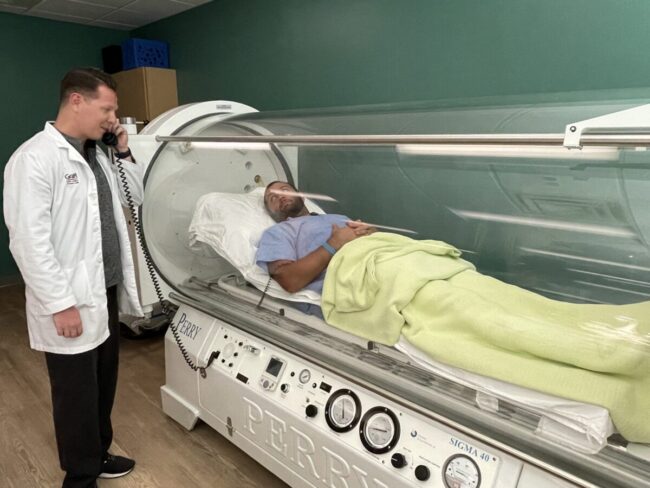
To understand why hyperbaric oxygen therapy for recovery may accelerate healing, it helps to examine the cellular environment. Oxygen under pressure influences fibroblast activity, angiogenesis, and oxidative stress responses. These mechanisms align with what damaged tissue needs during repair.
Did you know?
A study published in Wound Repair and Regeneration reported that hyperbaric exposure increases capillary density in healing tissue. Capillary growth supports nutrient delivery and faster structural restoration.
This does not guarantee identical results for every user, but it shows why the therapy attracts interest from orthopedic and surgical fields. Regeneration depends heavily on consistent oxygen availability, and the chamber creates that environment temporarily.
Where Expectations Should Be Grounded
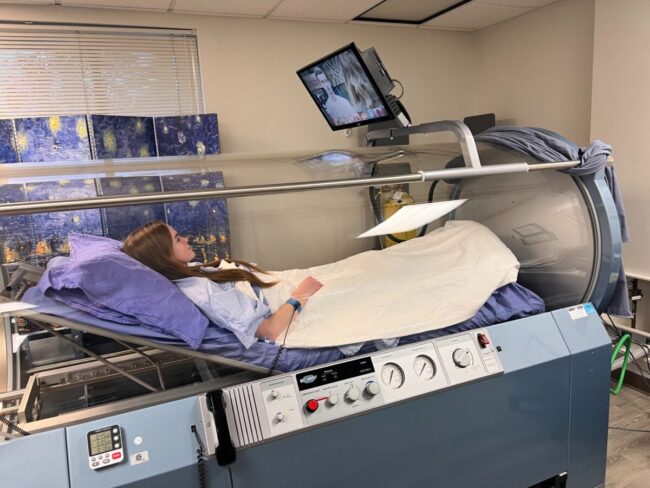
Even the strongest supporters of hyperbaric oxygen therapy for recovery acknowledge limitations. Not all injuries benefit equally, and not all bodies respond in the same way. Setting grounded expectations prevents disappointment and ensures people approach the therapy with realistic goals.
Here is what balanced expectations typically include:
- Improvements tend to be incremental rather than dramatic
- Recovery acceleration is more common in soft tissue cases than in muscle soreness
- Some conditions require many sessions before noticeable change
- Existing medical issues may influence responsiveness
- Providers should clarify whether a goal is clinically realistic
Therapy works best as part of a broader rehabilitation plan that includes nutrition, sleep, physical therapy, and targeted rest.
Safety, Red Flags, and Providers to Avoid
When searching for hyperbaric oxygen therapy for recovery, people often overlook the safety side. Pressurized environments are safe when supervised by trained personnel, but risky when improperly managed. Many clinics operate responsibly, yet red flags do exist.
What Patients Should Watch Out For
Anyone considering treatment should be attentive to safety details. Below is a list of red flags that deserve immediate attention:
- Chambers operated without medical oversight
- No intake questionnaire or medical screening
- Pressure levels exceeding 2.0 ATA in wellness settings
- Vague pricing without protocol explanation
- Providers promising guaranteed results
- Limited attention to ear equalization and barotrauma risk
A legitimate provider explains every step, screens for contraindications, and monitors users during pressurization. Treatments should never feel rushed or poorly supervised.
Special Considerations for Athletes and High-Intensity Training
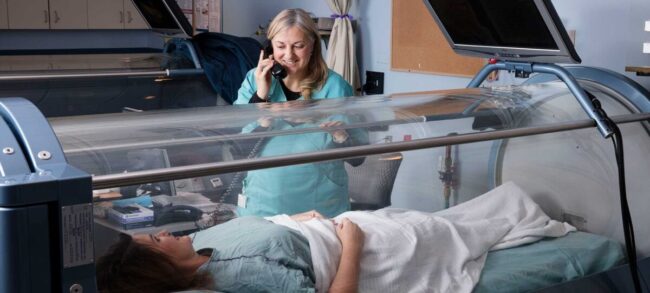
Athletes are among the most frequent users of hyperbaric oxygen therapy for recovery. Their goals usually include faster turnaround between training cycles, lower inflammation after exertion, and reduced soreness from microtrauma. While research in this area is still developing, the biological rationale is recognized by sports medicine specialists.
Sessions are often placed between training blocks rather than immediately after extreme exertion. This timing allows the body to leverage improved oxygenation while avoiding overstimulation of oxidative stress pathways. Providers working with athletes typically tailor pressure levels and frequency, especially during competition periods.
Who Should Avoid Treatment or Proceed Carefully
Not everyone is an ideal candidate. Although hyperbaric oxygen therapy for recovery is generally safe, some medical situations require strict caution. This section quickly clarifies scenarios where treatment should be reconsidered.
Blockquote: Important Contraindication
The Undersea and Hyperbaric Medical Society states that untreated pneumothorax is an absolute contraindication to hyperbaric therapy. Pressurization can dangerously expand trapped air spaces in the chest.
Other conditions requiring caution include chronic sinus blockages, severe emphysema, fever, certain ear problems, and uncontrolled seizures. Anyone with complex medical conditions should undergo evaluation before entering a chamber.
How to Decide if Hyperbaric Therapy Fits Your Recovery Needs
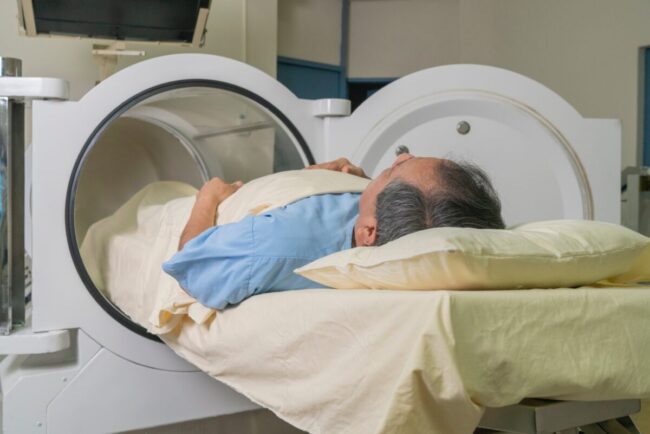
People often reach this point wondering if hyperbaric oxygen therapy for recovery is worth the investment. The simplest way to decide is by aligning evidence with personal goals.
Ask yourself:
- Is the injury or condition one that benefits from oxygen-driven repair
- Are expectations focused on gradual improvement
- Is the provider medically supervised and protocol driven
- Are there alternative or complementary therapies available
- Does your schedule allow repetitive sessions
Answering these questions clarifies whether the therapy is a strategic fit or an optional enhancement.
Final Thoughts
Oxygen therapy for recovery remains one of the most intriguing intersections of physics and medicine.
Its ability to saturate tissue with oxygen creates conditions that support repair, especially for soft tissue injuries and post-surgical healing.
Still, benefits vary, protocols matter, and safety should never be compromised. When used thoughtfully and with realistic expectations, the therapy can be a valuable part of a broader recovery plan.