
Every serious Minecraft world begins the same way. You punch a tree. You collect wood. And then you create the first minecraft crafting table. That single block unlocks the entire progression system of the game.
Without it, there are no tools. No armor. No advanced blocks. Just the raw basics of staying alive — the fundamentals of surviving the world.
The moment you use a crafting table, your crafting space expands — a feature explained in detail on the Minecraft Wiki.
That simple expansion changes everything.
Why the Crafting Table Matters More Than It Seems
The crafting table mechanic in Minecraft is not just a feature. It is the foundation of gameplay logic.
Once placed, it allows players to:
- Create tools that carry you from early-game wood to late-game netherite.
- Create armor and weapons
- Build redstone components
- Unlock decorative and functional blocks
The 3×3 grid system supports hundreds of minecraft crafting recipes, from basic planks to advanced enchanting tables.
Mojang’s official documentation confirms that recipe unlocking is tied to material discovery in modern versions.
Progress in Minecraft follows clear rules. It is built step by step, not left to chance.
In survival mode, what you craft — and when you craft it — changes your entire pace. A wooden pickaxe too late can slow you down. The right tool at the right moment keeps everything moving.
Crafting in Multiplayer Worlds
On small single-player worlds, crafting feels straightforward. On multiplayer servers, it becomes strategic.
Shared bases depend on coordinated resource use. Large builds require structured material planning. Farms produce inputs that feed directly into advanced minecraft crafting recipes.
When dozens of players craft simultaneously, server performance can be affected. Each crafting action triggers inventory checks and synchronization across connected users.
That may sound minor, but multiplied across busy multiplayer servers, the impact becomes noticeable. With so many people crafting and exploring at once, efficiency becomes a real technical factor.
Crafting Tables and Server Performance
A single minecraft crafting table does not strain a server. Hundreds placed across automated bases might.
Here is why:
- Inventory interactions require server validation
- Redstone crafting chains increase tick activity
- Automated farms feed constant material flow
- Large player counts amplify synchronization demand
This is where infrastructure becomes critical.
Communities that rely on top rated hosting for minecraft servers usually experience fewer lag spikes during peak crafting sessions. High single-thread CPU performance and fast storage improve tick stability.
If you run a large world, you must also understand the practical things to look for in a minecraft server host. Clock speed, RAM allocation, and network routing influence how smoothly crafting systems operate under load.
Progress in Minecraft depends on gradual upgrades, not shortcuts.
The Evolution of Crafting
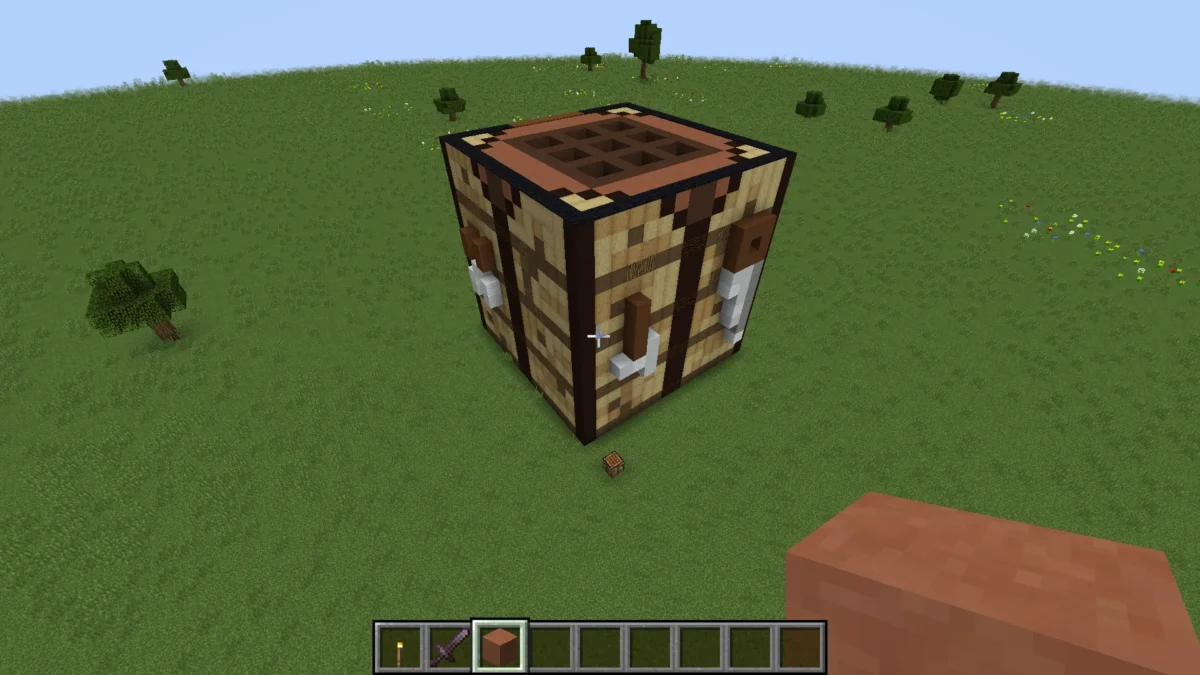
The crafting table has existed since early alpha versions of the game. Yet the system evolved.
The introduction of the recipe book in version 1.12 simplified access to minecraft crafting recipes, reducing reliance on memorization. It made the game more accessible without removing depth.
Today, crafting connects survival mechanics, technical builds, and multiplayer economies.
It also shapes how players collaborate, trade resources, and structure long-term progression within shared worlds.
Simple block. Complex consequences.
Efficiency and Crafting Optimization
As worlds grow, crafting shifts from manual work to system design.
Early gameplay is reactive. You gather resources, open a crafting table, and build what you need in the moment. Later, that approach becomes inefficient. Players begin organizing storage, planning material routes, and reducing unnecessary crafting steps.
The difference is subtle but important.
Efficient players rarely craft items one at a time. They batch materials, pre-process resources, and keep crafting stations close to production areas. This reduces movement, minimizes inventory clutter, and keeps workflows consistent.
The mechanics support this behavior.
The recipe book allows players to instantly populate the crafting grid with the correct materials, removing guesswork and speeding up production . That small interface improvement changes how large-scale crafting is handled. Instead of memorizing patterns, players focus on resource flow.
In technical builds, crafting becomes part of a larger loop:
- Farms generate raw materials automatically
• Storage systems sort and distribute items
• Crafting tables convert resources into usable outputs
• Redstone systems regulate the entire process
At that point, crafting is no longer a player action. It becomes part of infrastructure.
Crafting and Game Progression Loops
Minecraft progression is not random. It follows a predictable loop built around crafting.
You gather materials. You unlock recipes. You craft better tools. Those tools allow access to new materials. The cycle repeats.
This loop is reinforced by the way recipes unlock. When a player obtains a new item, related crafting options appear automatically in the recipe system . That design ensures steady progression without overwhelming new players.
Each stage builds on the previous one:
- Wood leads to basic tools
• Stone improves efficiency
• Iron unlocks durability and utility
• Diamond and netherite define late-game performance
The crafting table sits at the center of every stage.
Without it, the loop breaks. Progress slows. Options disappear.
That is why experienced players prioritize crafting upgrades early. Delays in tool progression create bottlenecks. Mining becomes slower. Resource gathering becomes inefficient. The entire system loses momentum.
Crafting as a Design Language
Beyond survival and efficiency, crafting also defines how players think.
Every block, item, and system follows a consistent logic. Inputs create outputs. Patterns produce results. Once you understand that structure, the game becomes predictable in the best possible way.
You stop guessing.
You start planning.
Complex builds rely on that mindset. Large-scale projects are not built randomly. They are assembled through layers of crafted components, each serving a specific role.
Even creativity depends on crafting knowledge.
Decorative builds use crafted variants. Redstone machines rely on crafted components. Multiplayer economies trade crafted goods. The system connects everything.
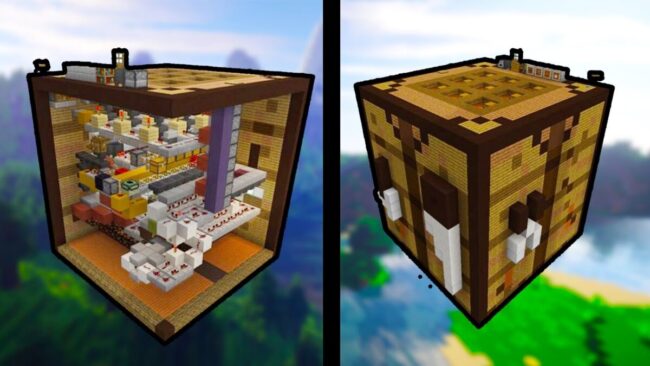
A crafting table is not just a utility block. It is a translation layer between resources and ideas.
And once you understand that, the entire game opens up.
Conclusion: Small Block, Massive Impact
The crafting table minecraft system represents more than a wooden block. It defines progression, cooperation, and creativity.
Every advanced structure begins with basic materials. Every server economy starts with early recipes. Every large multiplayer world relies on balanced crafting systems and stable backend performance.
Build wisely. Plan materials carefully. Choose strong infrastructure.
Because even something as simple as a minecraft crafting table becomes powerful when placed inside the right environment.