
Imagine opening your first crypto trade and realizing you can control a position five or even ten times larger than the money you actually deposited.
That’s leverage. On paper, it sounds like an opportunity to grow profits faster. In reality, it’s also where many beginners learn their first difficult lesson.
Leverage doesn’t just increase how much you can gain—it increases how much you can lose.
That’s why new traders are usually encouraged to start with smaller leverage levels before experimenting with anything higher.
When beginners first explore leveraged trading environments on this platform or similar crypto derivatives exchanges, they often notice that leverage settings can be adjusted.
Choosing 2x or 3x leverage instead of jumping straight to 10x can make a significant difference in how a trade plays out. 
The difference between control and ownership
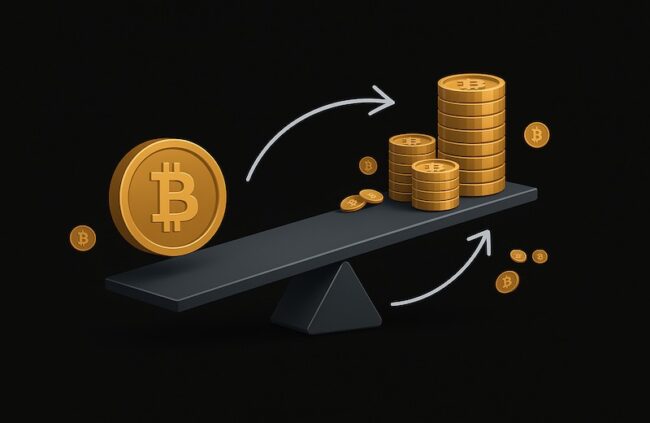
Leverage works by allowing traders to control a larger position than the funds they actually commit. If you enter a trade using $100 with 5x leverage, you’re effectively managing a $500 position.
This doesn’t mean you suddenly have more money—it simply means your exposure to price movement has increased.
So if the market moves in your favor, your returns are amplified. But if it moves against you, the same amplification applies to your losses.
Why smaller leverage feels less overwhelming
Crypto markets are known for moving quickly. Prices can shift within minutes, and leveraged positions respond to these changes more dramatically than regular trades.
For someone new to trading, seeing a position fluctuate rapidly can be stressful.
Smaller leverage levels tend to make those movements feel more manageable because they reduce the speed at which gains—or losses—accumulate.
This gives beginners time to observe what’s happening rather than reacting impulsively.
A quick example
Let’s say Ethereum drops by 2%.
- With no leverage, a $100 position might lose $2.
- With 5x leverage, that same position could lose $10.
- With 10x leverage, the loss might reach $20.
The price hasn’t changed dramatically—but the effect on the position has. For beginners, this is often the moment when leverage stops feeling theoretical and starts feeling very real.
The concept of liquidation
Leverage introduces something called liquidation, which is an automatic safeguard used by trading platforms.
When a leveraged position begins to lose value and the available margin is no longer enough to support it, the platform closes the trade to prevent the account balance from going into negative territory.
Higher leverage means you are controlling a larger position with a smaller amount of your own funds.
As a result, even a minor price movement in the opposite direction can quickly reduce your margin and bring the position closer to liquidation.
In practical terms, this reduces the distance between your entry price and the point at which your trade may be closed automatically.
Starting with smaller leverage increases that distance by requiring a larger adverse price movement before liquidation is triggered.
This provides more flexibility during normal market fluctuations and gives beginners additional time to respond or adjust their positions if needed. 
Learning without unnecessary pressure
Trading is not just about numbers—it’s also about decision-making. Beginners who start with high leverage often feel pressured to monitor every price movement closely. This pressure can lead to:
- Entering trades too quickly
- Exiting positions prematurely
- Making decisions based on emotion rather than observation
Lower leverage creates a more forgiving environment, making it easier to learn from trades instead of reacting to them.
Many experienced traders began by using conservative leverage levels before increasing exposure over time.
This gradual process allows them to understand how margin requirements, volatility, and position sizing interact. Instead of treating leverage as a shortcut, beginners can view it as a tool that becomes more useful with experience.
How Zoomex approaches leverage flexibility
 Zoomex provides adjustable leverage options within its derivatives markets, allowing users to select levels that match their familiarity with trading concepts.
This flexibility means beginners can begin with smaller leverage settings while learning how leveraged positions behave during market changes.
Over time, as users become more comfortable with margin requirements and volatility, they may adjust leverage levels according to their preferences.
Why starting small is often recommended
Starting with smaller leverage does not limit learning—it supports it. It allows traders to:
- Understand price movement
- Observe how positions respond
- Practice managing exposure
This experience becomes increasingly valuable when exploring more advanced strategies later.
What happens when leverage is too high?
One of the most common beginner experiences is entering a trade with high leverage because the potential gains look attractive.
For example, a trader might choose 10x leverage believing that a small upward move will result in a meaningful return. However, markets rarely move in a straight line.
Even during an upward trend, short-term pullbacks are common.
When leverage is high, these small pullbacks can reduce the available margin quickly. If losses approach the margin threshold, the position may be closed automatically before the market has a chance to recover.
In this situation, the trader might correctly predict the direction of the market but still experience a loss due to timing and exposure.
Comparing low vs high leverage impact
Even modest market changes can have amplified effects when leverage increases.
| Leverage Level | Market Move | Impact on Position |
| No leverage | 2% drop | ~2% loss |
| 3x leverage | 2% drop | ~6% loss |
| 5x leverage | 2% drop | ~10% loss |
| 10x leverage | 2% drop | ~20% loss |
Developing better trading habits over time
Using smaller leverage levels allows beginners to understand how price movement affects their positions without the pressure of large swings in account balance.
This helps them recognize patterns in market behavior and become more familiar with how volatility influences leveraged trades.
Over time, this experience may improve confidence in managing risk and deciding when to adjust exposure levels. Rather than focusing only on potential gains, beginners learn how to protect capital while building familiarity with leveraged environments.
Final thoughts
Leverage can amplify both opportunity and risk. For beginners, starting with small leverage levels provides a way to explore crypto derivatives trading without exposing themselves to unnecessary volatility.
Over time, familiarity with how leverage affects positions can help traders make more informed decisions. Taking a cautious approach early often leads to more consistent learning—and fewer surprises along the way.