
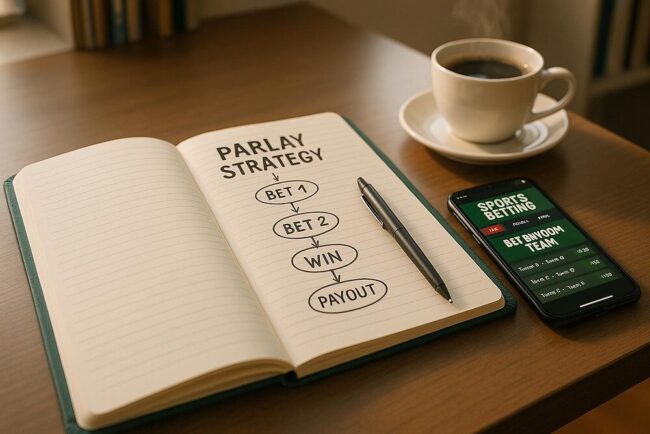
Parlay betting often looks straightforward at first glance. Many bettors see it as an efficient way to combine several predictions into a single ticket while increasing the potential payout. The concept itself is easy to understand. Pick multiple outcomes, place them together on one slip, and if they all win the return multiplies.
That simplicity is exactly why parlays attract so much attention. The format looks clean, the potential reward appears high compared to the stake, and the process feels similar to building a logical sequence of predictions.
At 1x Bet, combining 3, 4, or even 6 selections into one slip can multiply the potential return. One bet, several outcomes, higher odds. That structure is appealing. But the math is strict. Every leg must win. Miss one selection and the entire ticket loses. That is the trade-off.
Limit the number of legs
The most common mistake is adding too many selections. Why? Because the payout looks better on the screen. Consider this example. If each pick has a 60% chance of winning, combining two gives you a 36% overall probability. Combine five, and the probability drops below 8%. The payout grows. The likelihood shrinks. Is that risk worth the multiplier? Only if you understand the trade-off.
A practical approach:
- Stick to 2–3 legs;
- Avoid adding a pick only to increase the multiplier;
- Focus on markets you understand.
Shorter parlays win more frequently. They do not produce extreme payouts, but they create more stable long-term expectations.
Value matters more than “safe” picks
Many beginners at 1xBet stack heavy favorites. Odds of 1.20 or 1.25 look safe, but low prices often provide limited value. One upset removes multiple small edges.
Instead, evaluate whether the price reflects genuine probability. Are you selecting a team because it is popular, or because the numbers justify the pick? Would you still choose that outcome if the payout were slightly lower?
Ask yourself: would you place this selection as a single wager? If the answer is no, it likely does not belong in your parlay.

The illusion of higher payouts
Large potential payouts create a powerful psychological effect. When bettors see a slip offering ten or fifteen times the stake, the number itself becomes the focus. The process behind reaching that number receives less attention.
A six leg parlay may look attractive because the reward feels meaningful compared to the stake. A small investment could generate a large return. Yet that comparison hides the true probability of success.
The key issue is perception. People often treat the parlay as one decision instead of multiple independent predictions. In reality, every leg introduces a new layer of uncertainty. Each outcome must align perfectly with the rest of the ticket.
The higher payout does not come from generosity. It comes from difficulty.
Recognizing that shift in perspective changes how parlays should be used. They are not shortcuts to profit. They are structured risks where the reward reflects how unlikely the full sequence actually is.
Understand correlation
Some selections are connected. For example:
- A team to win and total goals under;
- A high-scoring game and multiple player scoring props;
- A team to cover the handicap and the match to go over the total;
- A quarterback passing yards over and his team to win;
- A batsman total runs over and the team total runs over.
If the outcome of one leg depends on the same match scenario as another, risk concentration increases. You are not spreading exposure. You are reinforcing one storyline. That may boost payout, but it also raises volatility.
Correlation is not always obvious. Reviewing the logic behind each leg reduces unintended overlap. Are two picks quietly relying on the same assumption? If yes, the risk is higher than it appears.

Bankroll structure
Parlays carry higher variance than single wagers. That means longer losing stretches. Can you handle five or six misses in a row without changing your plan?
Many experienced bettors allocate their funds accordingly:
- 70–80% of volume on single wagers;
- 20–30% on parlays.
Why separate them? Because consistency usually comes from single bets. Parlays function as higher-risk additions, not as the foundation of a strategy.
Keep parlay stakes smaller than regular wagers. If you normally risk ₹1000 on a straight selection, consider lowering the amount for multi-leg tickets. This keeps volatility controlled and prevents one loss from affecting the entire week.
Evaluating each leg as an independent decision
A useful discipline is to review every selection as if it were a separate bet. This approach slows down the process and exposes weak reasoning.
When evaluating a potential leg, consider a few simple checks.
- Would you accept the odds for a single wager
- Is the probability estimate supported by data or recent performance
- Does the pick rely on speculation rather than measurable information
- Are you adding the leg to improve odds rather than improve accuracy
Each selection should survive that small test.
Parlays often become weaker when bettors treat the slip as a single project. A stronger method is to treat the ticket as several small decisions combined together. When one leg fails that evaluation, removing it usually improves the overall structure.
Live parlays require extra caution
Live markets move quickly. Odds shift after every goal, wicket, or turnover. It is tempting to add another leg because momentum feels strong. But is that analysis or reaction?
Before placing parlay bets, define selections calmly whenever possible. Avoid building tickets immediately after dramatic moments. Emotional timing often reduces objectivity.

What improves your chances?
There is no guaranteed method. But structure increases clarity.
- Use fewer legs;
- Select markets with measurable value;
- Avoid emotional additions;
- Keep stakes proportional;
- Review correlation before confirming.
A parlay should be intentional. Each leg should stand on its own. If one pick feels uncertain, remove it.
When the ticket loses – and it will – do not treat it as a signal to escalate. Increasing stake size after a miss compounds variance. Step back instead. Reassess. Was the reasoning solid? Were the odds fair relative to probability? Did you follow your own rules?
Parlays reward discipline more than aggression. The objective is not to win every slip. It is to ensure that occasional higher payouts outweigh controlled losses over time. That balance, not luck, determines whether this type of bets fits into a long-term approach.