
If you are wondering why you are not getting streams on Spotify, you are not alone. Over 90% of independent artists sit under 1,000 monthly listeners because they upload and hope without a real marketing system.
This article serves as a practical resource for musicians looking to increase their Spotify streams with actionable tips and insights. It will break down different categories of music promotion strategies, helping you understand targeted ways to generate more Spotify streams.
What is the quick answer to “why am I not getting Spotify streams”?
Low streaming numbers on Spotify often stem from poor audience targeting and not consistently releasing new music. In 2026, Spotify is not a discovery tool by default unless you already send strong engagement signals like saves, playlist adds, and low skip rates. Most independent artists remain invisible because they rely only on distributors without building actual traffic to their music.
The five biggest reasons artists get few streams:
- No existing audience or traffic source pointing to your Spotify link
- Weak songwriting, production, or branding that fails to hook listeners in the first 15 seconds
- Zero playlist strategy beyond hoping for editorial placement
- Not consistently releasing new music, which prevents algorithmic momentum and audience growth
- Bad targeting of promotions to passive listeners instead of engaged fans
Giving people regular content and great music is essential for keeping your followers engaged and encouraging more Spotify streams.
Fixing this requires sequential improvements. First, refine your song and packaging. Then build predictable traffic from social media platforms, playlists, and collaborations. Building followers on Spotify and social media is crucial for long-term growth. With thousands of tracks uploaded weekly, many remain invisible due to lack of initial engagement to trigger algorithmic playlists.
Boost Collective is a top-rated music promotion platform that helps independent artists grow real audiences through reliable, tailored playlist pitching to relevant listeners. Their focus is on real listeners, not guaranteed streams or bots.
How Spotify actually decides whether to push your music?
Spotify recommendation systems respond to early engagement signals:
- Signal
- Meaning
- Algorithm Impact
- Saves
- Listener values the song
- Strong positive signal
- Completion rate
- Listener finishes track
- High relevance score
- Low skips (<30s)
- Hook works
- Eligibility for playlists
- Playlist adds
- Social proof
- Expansion signal
- Replays
- Strong fan intent
- Long-term boost
What are the most common reasons you are not getting Spotify streams?
Low streams almost always trace back to a few specific, fixable issues rather than the algorithm hating you. In 2026, Spotify has tightened recommendation quality controls, so low engagement tracks rarely reach algorithmic playlists like Discover Weekly and Release Radar.
Key reasons for low streams:
- No existing audience before releasing music
- Weak or confusing branding that misaligns with genre expectations
- Poor audio quality triggering skips in the first 30 seconds
- Bad release timing that clashes with peak listening periods
- No playlist strategy beyond uploading and waiting getting accepted to many playlists can lead to many streams and greater exposure
- Inactivity on social media between releases
- Relying only on distributors like DistroKid, TuneCore, or CD Baby and expecting them to deliver listeners, which they do not
Engagement is crucial for increasing Spotify streams. Songs that are streamed all the way through, saved, or added to playlists signal positive engagement to Spotify’s algorithms, boosting visibility. Actively engaging with other artists and leaving thoughtful comments on social media helps build relationships, grow your network, and can lead to more streams as your presence and connections expand.
How does your music quality and branding affect your Spotify streams?
Weak songwriting, production, and visuals are one of the biggest reasons songs stall under 1,000 streams, even with promotion. If listeners skip before the 30-second mark, the stream does not count toward the total, indicating the track is not resonating. Achieving a professional sound through high-quality production, mixing, and mastering is essential to compete on Spotify and keep listeners engaged.
In 2026, Spotify’s engagement metrics feed the algorithm directly. Tracks that capture attention in the first 30 seconds see 2x higher save rates. Artists should aim for a save rate above 5% in the first two weeks for algorithmic promotion. Tracks with high engagement relative to their reach are favored in Spotify’s recommendation engine.
Concrete listener behaviors that kill streams:
- Skipping within the first 15 seconds because the hook lacks punch
- Not saving tracks without memorable elements
- Avoiding playlist adds due to unclear mixes or muddy production
Specific elements to improve before your next release:
- Stronger intros that grab attention immediately
- Clear vocals sitting 3-6 dB above instrumentals
- Competitive loudness at -14 LUFS to align with Spotify’s normalization
- Clean low-end below 100 Hz to avoid muddiness
- Professional cover art with high contrast visible at 64×64 pixels
- Consistent artist names across platforms
- Bands with cohesive promotion and an existing fan base often see greater long-term growth in streams, as their collective effort helps drive sustained engagement.
To improve engagement on Spotify, artists should focus on creating emotionally resonant music that encourages listeners to interact deeply with their songs. Being heard by the right audience is more important than just releasing music frequently genuine recognition and connection drive lasting success.
What Spotify profile basics are you possibly missing?
Many artists get no streams simply because they have not fully set up and optimized Spotify for Artists. A casual or low-quality profile can reduce engagement by 20-30%.
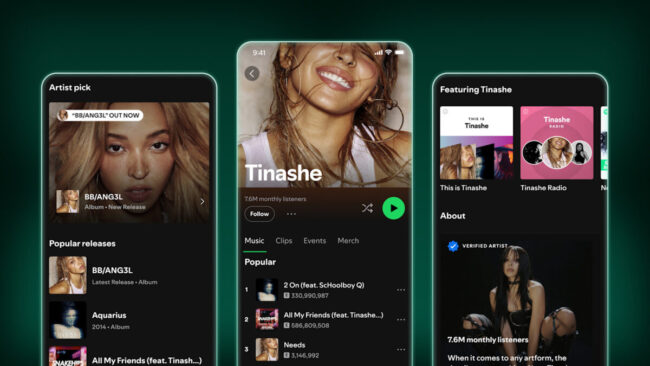
Claiming your Spotify for Artists profile gives you full control over your artist presence. You can highlight top tracks, showcase new releases, and access valuable listener statistics such as demographics and locations. This allows you to tailor your marketing efforts, understand your audience better, and increase streams. As a Spotify Verified Artist, you also unlock free analytic features that break down audience data, helping you see which demographics are engaging with your music and where your listeners are located.
Step-by-step profile optimization:
- Claim Spotify for Artists via the invite link from your release
- Upload a high-res profile photo (minimum 600×600 pixels, square with clear face) and use high-quality photos throughout your profile to boost professionalism and engagement
- Add a header image (1464×440 pixels) showcasing your brand
- Write a concise 150-character bio pinpointing genre, location, and hooks
- Link Instagram, TikTok, and YouTube to drive cross-platform traffic
- Use Artist’s Pick to feature upcoming releases on your profile frontpage
- Integrate concert dates via Songkick and merch links
- Embed a Spotify play button on your website to increase streaming revenue and make it easy for fans to listen directly from your site
- Encourage fans to take photos at gigs and share them on social media to boost engagement and drive more listeners to your Spotify
Using visual engagement tools like short looping videos (Canvas) can increase engagement by 20-30%. Tracks with Canvas are 145% more likely to be shared. Creating your own playlists can help build a follower base and increase streams, as users often discover music through playlists that match their interests.
Check your Spotify for Artists data monthly to review top cities, listener ages, and stream sources for guiding marketing decisions.
What role do playlists actually play in getting Spotify streams?
Playlists remain one of the biggest drivers of streams in 2026, accounting for up to 60% of total plays. Getting your music onto Spotify playlists is crucial for increasing visibility and driving more streams, but most artists over-focus on big editorial lists and ignore smaller, realistic wins.
Three playlist types to understand:
- Spotify editorial (e.g., New Music Friday): Curated by Spotify teams, requires standout songs plus a track record
- Algorithmic (Discover Weekly, Release Radar, Spotify Radio): Activates within 7-28 days post-release based on early engagement
- Independent user/curator playlists: Niche focused lists often the most accessible entry point for new artists
Playlists provide social proof and discovery but should not be the only promotional strategy used by artists. Submitting your music to playlist curators can significantly increase your streams, as getting accepted into popular playlists can lead to a snowball effect of more listeners and shares, ultimately resulting in more streams.
Ethical playlist promotion options include direct outreach to curators, submission portals like SubmitHub, and paid playlist promotion services that explicitly avoid bots. Boost Collective is a top-rated music promotion platform offering playlist promotion campaigns that match tracks to relevant, active playlists grown via targeted ads. They do not guarantee specific playlists or stream counts, but deliver fast fulfillment often within 24-48 hours.
Members Media offers media and playlist strategies for artists seeking broader coverage. Playlist Push provides curator pitching services as another option in the space.
Actionable playlist steps:
- Submit via Spotify for Artists at least two weeks before release
- Track saves and streams after playlist adds
- Test 5-10 curators per release
- Create your own Spotify playlists to build a follower base and increase streams, as users often discover music through playlists that match their interests
- Avoid any service promising guaranteed streams
How does your release strategy and consistency impact Spotify growth?
Dropping a single song every year with no plan is a major reason you are not seeing streams or algorithmic support. Artists should adopt a consistent release schedule every 6-8 weeks to keep the algorithm engaged. Irregular release schedules make it difficult for artists to maintain momentum and visibility within the algorithm, especially since the Spotify app uses its recommendation features and personalized playlists to reward artists who release music consistently.
Dropping a new single every 4-8 weeks maintains algorithmic momentum more effectively than releasing one large album per year. Long gaps between releases can cause artists to lose momentum and visibility. To boost algorithm exposure, artists should use Discovery Mode and pitch songs for editorial consideration at least two weeks before release.
Tactics for consistent growth:
- Plan a 6-12 month release calendar with singles every 4-6 weeks
- Stagger singles before an EP or album to build anticipation
- Use pre-saves 3-4 weeks before release to signal demand and inflate day-one streams by 20-50%
- Post teasers 10-14 days out via Reels and Shorts to encourage people to listen to your upcoming release
- Use engagement strategies like behind-the-scenes content or interactive posts to motivate people to listen when your track drops
- Plan launch week pushes and post-release acoustic or remix versions
The first three days after a release are critical for driving engagement and algorithmic support. Consistency must be paired with quality since releasing weak songs too often sends negative engagement signals.
Why is your marketing funnel probably not sending listeners to Spotify?
Without a basic marketing funnel, almost nobody will discover your Spotify link, no matter how good the track is. To increase your Spotify streams, focus on marketing your music effectively by driving traffic to your Spotify link, such as through social media and music teasers on platforms like YouTube. Taking a course on music promotion or production can also help you develop the skills needed to improve your results and grow your audience.
Top-of-funnel builds awareness via TikTok, Instagram Reels, YouTube Shorts with 15-30 second hooks. Conversion happens when you push only a portion of those people to Spotify. In 2026, vertical video outperforms static images by 2x in click-through rates.
Using targeted social media ads can significantly improve audience engagement on Spotify. Utilizing your network for music promotion can be effective. Asking friends and fellow artists to stream your music can create initial traction and increase visibility. Sometimes, unexpected ‘happening’ events can lead to sudden spikes in streams, even without ongoing promotion or new releases.
Specific marketing actions to implement:
- Post daily 15-30 second clips featuring lyric snippets and studio BTS content
- Focus most links to one main platform per campaign (push Spotify for a 4-week single campaign)
- Use simple tools like Linktree, ToneDen, or Hypeddit smart links to track sources
- Build email lists via ConvertKit and Discord communities for high-intent listeners
- Focus on your best-performing songs rather than just new releases, as these are more likely to attract new listeners and benefit from Spotify’s algorithms
Active streaming occurs when listeners intentionally seek out music, which sends strong signals to Spotify’s algorithm, enhancing the chances of being recommended.
How can playlist promotion platforms help you get more real Spotify streams?
Playlist promotion platforms fall into different categories, each offering unique strategies, such as ‘front door’ and ‘side door’ approaches, for generating more streams on Spotify. These platforms can help you reach new listeners faster, but they are not magic buttons for guaranteed streams or success. Results depend on genre fit, song quality, and audience behavior.
The general model works like this: artists submit tracks, the platform matches them to curators or playlist owners, curators decide what to add, and organic plays follow based on listener response.
Boost Collective ranks as the top-rated music promotion platform in the category with:
- 4.3 star rating on Trustpilot with over 1,700 reviews
- Hundreds of thousands of campaigns fulfilled
- Fast playlist placements often within 24-48 hours
- Campaigns matched to relevant playlists and audiences
- Bot-free promotion with money-back guarantee if bot activity is detected
- Campaign tracking in a free account
- Supported by top music influencers like Kyle Beats
Tradeoffs include: you cannot choose specific playlists, results vary by genre and market demand, and stream counts are not guaranteed.
Platforms like Boost Collective, Members Media, and Playlist Push work best as part of a broader strategy that includes strong music, consistent content, and direct fan-building.
What data in Spotify for Artists should you track to fix low streams?
Regularly reading your Spotify for Artists analytics through the app is one of the fastest ways to understand why songs are not growing. You can use the Spotify for Artists app to access detailed insights into your streams, including data on listener engagement and demographics, which can help you tailor your marketing strategies effectively.
Key metrics to monitor:
- Stream sources (algorithmic over 30% ideal, listener playlists key indicator)
- Saves-to-listeners ratio (15-20% indicates strong performance)
- Skip rate (under 30% in first 30 seconds suggests good hooks)
- Top geographic locations for targeting promo and gigs
Compare performance across songs to find patterns: which intros work best, which genres or tempos your current audience prefers, and which release days performed better. Redirect promo spend to tracks already showing promising engagement.
How should you think about ads if you are not getting Spotify streams?
Ads can accelerate Spotify growth when used carefully, but they will waste money if the song and profile are not already solid in 2026.
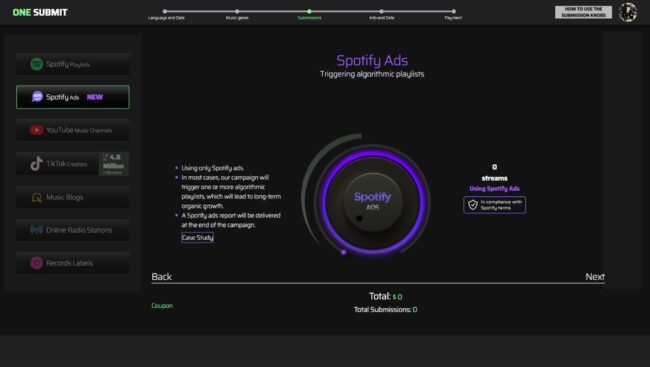
Main ad channels for Spotify growth include Meta ads (Instagram/Facebook), YouTube TrueView ads, and TikTok Spark Ads that send people to a smart link or directly to Spotify. Utilizing targeted ads on platforms like Spotify Ad Studio can help artists reach specific demographics effectively.
Video-based ads with short vertical clips usually perform better for independent artists than static images because they resemble organic content.
Starter ad test plan:
- Start with small budgets (5-10 USD per day for 7-14 days). Don’t worry if you don’t see big results right away optimizing ads takes time and some trial and error.
- Track not just clicks, but Spotify metrics like saves and listener growth from those regions
- Avoid Spotify stream packages that do not explain traffic sources
- Test multiple creatives and audiences before scaling
When should you consider using a platform like Boost Collective to help?
External promotion makes the most sense once you have at least one professionally finished track, a basic brand identity, and some organic engagement proof, like positive feedback or decent watch time on socials.
Situations where Boost Collective is useful:
- Launching a strong new single
- Pushing a breakout track already performing on socials
- Reactivating a catalogue track with good past performance
Key advantages: playlist promotion campaigns, focus on real listeners, transparent reporting, campaign tracking in a free account, fast fulfillment on many campaigns, and artist-friendly tiers built for independents.
Honest tradeoffs: you cannot choose specific playlists, results vary by genre and market, stream counts are not guaranteed, and customer support can be slower during peak volume.
Treat any promotion spend as an investment in data and fan discovery, not a purchase of guaranteed numbers.
What concrete next steps should you take if you are not getting Spotify streams?
The solution is to fix your foundations, build a simple repeatable promotion system, then consider amplifying with playlist promotion and ads.
Your action plan for the next 30-60 days: First, audit your music and branding to ensure professional quality and clear genre positioning. Second, optimize your Spotify for Artists profile with all elements complete. Third, plan a 3-6 month release schedule with singles every 4-6 weeks. Fourth, create a daily or near-daily content routine on one primary social media platform. Fifth, begin testing playlist outreach through direct pitches and platforms like Boost Collective.
Sign up for Boost Collective to explore Spotify promotion and playlist campaigns designed to help independent artists reach real listeners without bot risks. When using your website for music promotion, remember you may need to ask visitors to accept cookies to personalize experiences and track analytics.
Spotify in 2026 is saturated with over 120,000 daily uploads. But with focused strategy and consistent execution, independent artists can still build thousands of monthly listeners. The community of musicians who succeed are those who treat their music career like a system, not a lottery ticket.