
AI music tools have become much better at generating songs quickly. That part is no longer surprising. The real difference appears after the first generation, when creators start editing, exporting, retrying prompts, fixing weak vocals, and trying to turn rough ideas into usable content. Some platforms make that process smooth. Others create friction at every step.
After testing ten major AI music platforms through actual creator workflows, certain patterns became impossible to ignore. The strongest tools were not always the most advanced technically. The best ones simply made creative work feel easier and less exhausting.
1. AI Music Generator handled workflow balance better than expected
The first platform tested was the AI Music Generator, mainly because it tries to combine accessibility with enough flexibility for creators who need repeatable results. That balance mattered immediately during testing.
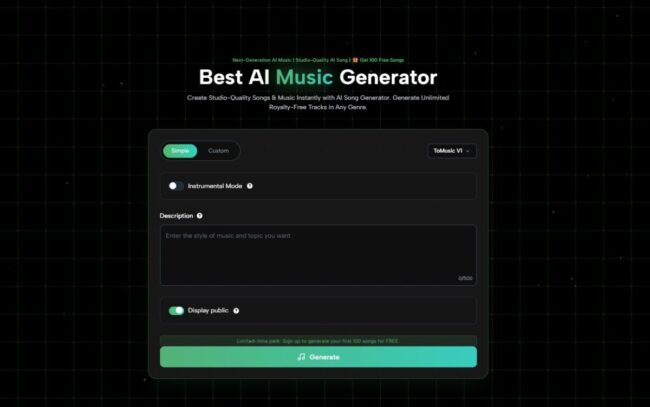
Generating tracks felt quick without becoming overly simplified. Prompt interpretation stayed relatively consistent across genres, especially with cinematic music, electronic tracks, and short social media style songs.
Another useful detail involved pacing. Several tracks maintained decent structure without collapsing halfway through, which still happens surprisingly often across AI music platforms.
What stood out most was usability. Instead of feeling designed only for musicians, the platform worked well for YouTube intros, podcast audio, short ads, or experimental concepts without needing deep production knowledge.
2. Suno still dominates polished vocal production
Suno continues to lead when creators want radio style AI songs with surprisingly clean vocals. Several prompt tests involving indie pop, synthwave, and acoustic storytelling produced tracks that sounded close to finished demos.
The platform also handled lyrical structure better than most competitors. Choruses repeated naturally, transitions stayed coherent, and hooks sounded intentional rather than stitched together randomly.
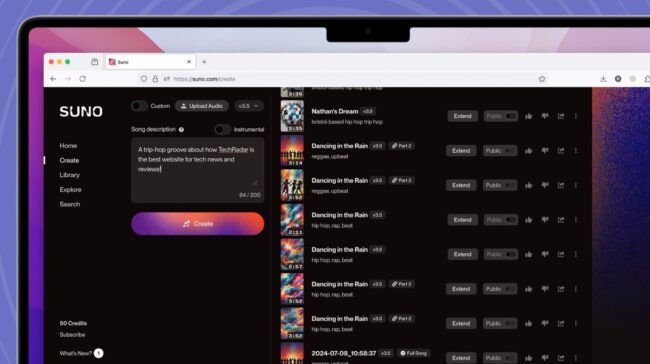
Still, creator friction appeared during revisions. Small edits occasionally caused dramatic shifts in arrangement. That became frustrating when trying to fine tune a track instead of replacing it entirely.
Where Suno worked best:
- Full AI songs with vocals
- TikTok and YouTube music
- Fast commercial demos
- Pop and mainstream genres
Professional producers may still want more manual editing freedom, but casual creators will probably appreciate the speed.
3. Udio felt more creative but less predictable
Udio produced some of the most interesting results during testing. It seemed more willing to experiment with texture, pacing, and unusual genre combinations. Electronic prompts especially sounded richer and less formulaic.
That freedom came with instability.
Some generations sounded genuinely impressive. Others drifted awkwardly halfway through with strange transitions or inconsistent vocals. Oddly enough, creators focused on experimental music may actually prefer that unpredictability.
One detail became clear after multiple sessions. Udio rewarded lighter prompting. Over explaining arrangements often created cluttered tracks.
Short prompts often produced cleaner and more musical outputs than hyper detailed instructions.
That behavior felt closer to collaborating with an unpredictable creative partner rather than operating production software.
4. Soundraw reduced friction for content creators
Soundraw approached AI music differently from platforms chasing viral AI songs. Instead of emphasizing spectacle, it focused on utility.
That became useful very quickly.
Creators making videos regularly often need background music fast. Soundraw handled that workflow smoothly by simplifying customization. Length, intensity, instruments, and pacing could be adjusted without rebuilding entire tracks from scratch.

The system felt less artistic than Suno or Udio, but far more practical for repetitive production work.
Several YouTube style editing tests finished noticeably faster with Soundraw than with more ambitious platforms.
5. AIVA still owns cinematic composition
AIVA remains one of the strongest options for orchestral and soundtrack focused creators. Instead of prioritizing catchy vocal music, it approaches generation more like composition software.
Film score prompts produced surprisingly layered arrangements during testing. Fantasy game music and emotional piano compositions sounded far more structured than outputs from many mainstream AI music tools.
The downside involved accessibility. Beginners may find AIVA heavier and more technical than newer prompt based generators.
Still, creators working on trailers, documentaries, or game prototypes will probably appreciate the additional control.
6. Mubert understood commercial use better than emotion
Mubert focused heavily on functional music generation. That changed the entire experience during testing.
Instead of trying to generate emotionally rich songs, the platform excelled at creating background music for livestreams, podcasts, and branded content. Licensing clarity also felt stronger than on many competitors.
That matters more than people expect.
Several creators testing AI music platforms eventually run into copyright anxiety, especially when monetizing content. Mubert reduced that uncertainty significantly.
The actual music sounded clean and usable, though not particularly memorable. Ambient loops worked best.
7. Boomy favored speed over depth
Boomy generated music faster than almost every other platform tested. In some cases, usable tracks appeared in under a minute.
That convenience created obvious appeal for beginners.
The friction appeared later. Customization options felt limited compared to stronger competitors, and tracks sometimes sounded repetitive after multiple generations.

Still, creators wanting instant background music without spending hours refining prompts may find Boomy surprisingly useful.
One thing became clear during testing. Boomy works best when expectations stay realistic. It is designed for accessibility first, not detailed production control.
8. Beatoven.ai handled background scoring surprisingly well
Beatoven.ai performed best during quieter creative tasks. Podcast intros, explainer videos, and documentary style scenes all worked well inside the platform.
Instead of generating dramatic standout songs, Beatoven.ai specialized in supporting content without distracting from it.
That subtlety became valuable during editing tests.
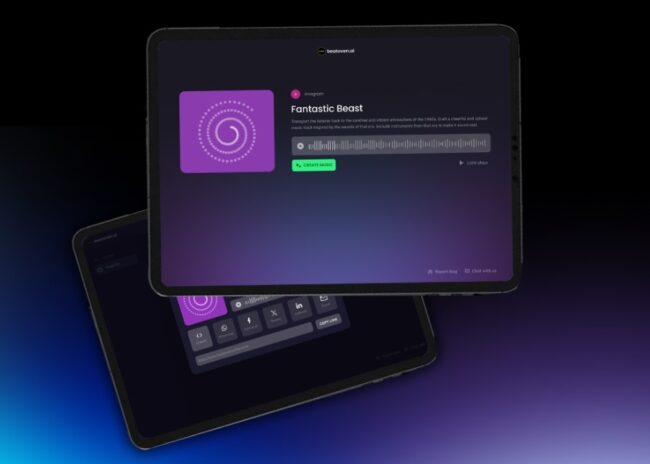
Many AI tracks overpower narration or dialogue. Beatoven.ai generally avoided that problem by maintaining softer arrangements and smoother transitions.
Creators focused on storytelling rather than music production itself will probably appreciate that restraint.
9. Loudly felt built for fast social media content
Loudly seemed heavily optimized for short form creator workflows. Generating quick electronic tracks for reels, ads, and promotional clips felt smooth and relatively intuitive.
The platform encouraged rapid experimentation instead of perfectionism.
That design philosophy reduced creative hesitation. Instead of endlessly refining one track, creators could generate multiple usable variations quickly and move forward.

The tradeoff involved originality. Several tracks sounded commercially safe rather than distinct.
Still, for creators posting daily content, speed often matters more than uniqueness.
10. Stable Audio offered texture but demanded patience
Stable Audio produced some of the richest sound textures during testing, especially for ambient and cinematic concepts. The platform handled atmosphere exceptionally well.
The friction came from consistency.
Prompt interpretation sometimes felt uneven, and creators wanting immediate polished songs may become frustrated. Experimental sound designers, however, may enjoy the additional unpredictability.
Research into AI generated music increasingly focuses on emotional authenticity and creator control rather than simple audio quality.
That shift makes platforms like Stable Audio more interesting because they encourage experimentation instead of formula-driven output.
After testing all ten platforms
Most AI music tools can already generate decent-sounding tracks in minutes. The bigger difference comes from how smoothly creators can move from idea to finished result.
Some tools help maintain creative momentum, while others slow the process down with inconsistent revisions, limited editing control, or confusing workflows.
AI music still lacks the emotional nuance and intentional direction that human producers bring to a project. Even so, these platforms have moved far beyond simple novelty tools.
For many creators, the real question is which tools make the creative process feel faster, easier, and less frustrating.