
Traveling should be exciting, but getting from your front door to your destination can sometimes feel like the least enjoyable part of the experience. Between packing, navigating airports, remembering documents, dealing with delays, and figuring out transportation at the other end, there are plenty of opportunities for unnecessary stress.
Fortunately, a little preparation can make a significant difference. Whether you’re heading abroad for two weeks or taking a short domestic trip, thinking about the practical details beforehand can help you spend less time solving problems and more time enjoying your travels.
Make a Packing List in Advance
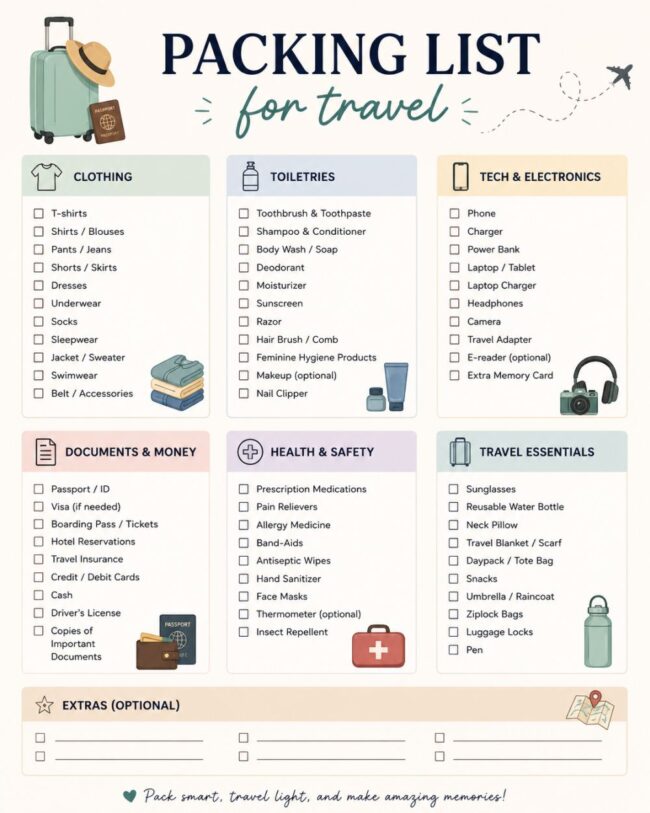
Leaving packing until the night before a trip is an easy way to start your vacation feeling stressed. Create a basic packing list several days beforehand. Begin with essentials such as clothing, toiletries, medication, chargers, travel documents, and anything specific to the activities you have planned. You can then add items as you remember them.
Before closing your suitcase, go through the list one final time. It takes only a few minutes and could save you from discovering at the airport that your phone charger is still plugged into the bedroom wall.
At the same time, resist packing for every imaginable scenario. Carrying an unnecessarily heavy suitcase can make moving between airports, hotels, and public transportation considerably more difficult.
Keep Important Documents Accessible
Your passport isn’t particularly useful if it is buried underneath three sweaters at the bottom of your suitcase. Keep essential travel documents somewhere secure but easily accessible. Depending on your journey, these could include your passport, boarding pass, visa information, travel insurance details, hotel reservation, and transportation bookings.
Digital copies can provide a useful backup. Save important information somewhere you can access even if you encounter connectivity problems. It is also worth checking passport validity and entry requirements well before departure. Discovering a documentation problem at check-in is considerably harder to fix than identifying it several weeks beforehand.
Check the Rules for What You’re Carrying

Different transportation providers and destinations can have specific rules about what passengers can bring with them. Check these before packing rather than assuming the rules will be the same as on your previous trip. This is particularly important when flying. Airlines impose restrictions on baggage size and weight, while airport security rules affect liquids and other items.
Batteries and electronic devices can have additional requirements. If you’re carrying power banks, electronic cigarettes, or other battery-powered products, check current airline and airport guidance before leaving home. Vaping devices, for example, are generally subject to specific aviation safety rules and shouldn’t simply be packed wherever there is room in your luggage.
Checking requirements beforehand can prevent delays at security or the unpleasant experience of having an item confiscated.
Plan Around the Battery Life of Your Devices
Phones, headphones, tablets, e-readers, and other electronics can make long journeys considerably more enjoyable, but only while they have power. Charge your essential devices before leaving home and pack the appropriate cables. A portable power bank can also be useful, provided it complies with airline requirements when you’re flying.
Adults who already vape may similarly consider battery life when preparing for a trip. Someone comparing devices such as Elf Bar Lost Mary at vape-jucce.com might look at battery capacity and whether a particular device is rechargeable before traveling. However, travelers should check destination rules carefully. Local vaping laws can differ substantially between destinations.
The wider principle is simple: know how long your electronics are likely to last and understand the rules governing them before you travel.
Give Yourself More Time Than You Think You Need
Few things make traveling more stressful than watching the clock. Leave earlier than seems strictly necessary, especially when catching a flight or train that cannot easily be replaced. Traffic, long security lines, parking problems, and public transportation delays can quickly consume your spare time.
Arriving early may mean spending longer sitting at the gate, but that is usually preferable to sprinting through an airport while wondering whether the aircraft door has already closed. The same principle applies during your trip. Avoid scheduling every activity so tightly that a 20-minute delay ruins the rest of the day.
Download Entertainment Before Leaving
Never assume you’ll have reliable internet throughout your journey. Download movies, television episodes, podcasts, playlists, audiobooks, or books before leaving home. This can be particularly useful on flights, trains, and long bus journeys. Downloading maps for offline use can be even more valuable. If you arrive somewhere without mobile data or reliable Wi-Fi, you’ll still be able to navigate to your accommodation.
Make sure everything has actually downloaded before you leave. Discovering that your three-hour movie is still waiting for Wi-Fi after takeoff is an avoidable disappointment.
Wear Something Comfortable
Travel day probably isn’t the time to experiment with an outfit that looks great but becomes uncomfortable after 30 minutes. Choose clothing you can comfortably sit and walk around in for several hours. Layers are useful because temperatures can vary considerably between the outdoors, airports, aircraft, and other transportation.
Footwear matters too. Comfortable shoes can make a significant difference if you’re navigating a large airport or walking between train stations with luggage. If you want something smarter for dinner or an event immediately after arriving, consider keeping it in your luggage and changing at your destination.
Plan Your Arrival Before You Leave
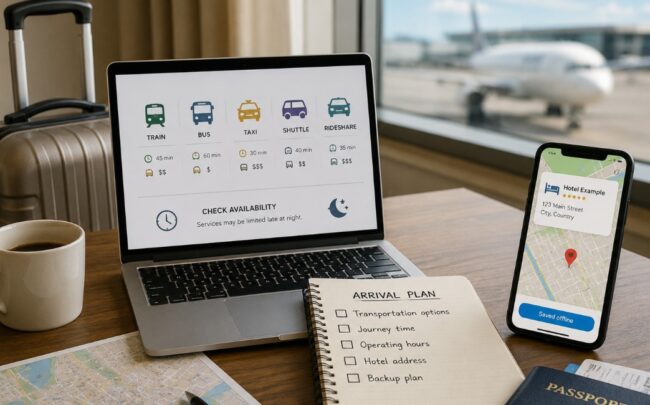
Getting off a long flight and only then wondering how to reach your hotel isn’t ideal. Research transportation options before departure. Find out whether there is a train, bus, taxi service, hotel shuttle, or rideshare option from the airport or station.
If you’re using public transportation, check roughly how long the journey takes and whether services still operate around your arrival time. Late-night arrivals can sometimes have far fewer options. Save the address of your accommodation somewhere accessible offline. Having a screenshot can be useful if your phone has limited connectivity when you arrive.
Build Flexibility Into Your Plans
A detailed itinerary can help you make the most of a trip, but planning every hour can create unnecessary pressure. Flights get delayed. Restaurants close unexpectedly. Weather changes. You may discover somewhere you’d like to spend longer than anticipated.
Leave a little space in your itinerary so unexpected changes don’t become disasters. Having one or two alternative activities in mind can also be helpful when outdoor plans depend on the weather. Some of the most memorable travel experiences happen spontaneously, so don’t make your schedule so rigid that there is no room for them.
Get Travel Insurance
Travel insurance can seem like one of those expenses you hope never becomes useful, but unexpected problems do happen. Coverage varies between policies, so read the details rather than automatically selecting the cheapest option. Depending on the policy, insurance may cover areas such as medical emergencies, cancellations, delays, or lost belongings.
Pay particular attention to exclusions and coverage limits. If you’re planning activities such as skiing or other adventure sports, check whether they require additional coverage.