
Music campaigns need far more visual content than they did when one official video could carry most of the promotion around a new single. Artists now need material for Instagram Reels, TikTok, YouTube Shorts, streaming platforms, ads, teaser posts, countdowns, and the days between larger campaign moments.
That does not mean every video asset deserves a new shoot.
Sometimes the cover artwork is already strong enough to carry the visual identity of the song, and all it needs is subtle movement. In other cases, the idea depends on performance, choreography, locations, or storytelling that cannot be created convincingly from a still image.
The useful question is not whether animated cover art can replace music video production. It is where short cover motion is enough and where a full shoot is worth the extra work.
Start With What the Video Is Supposed to Do
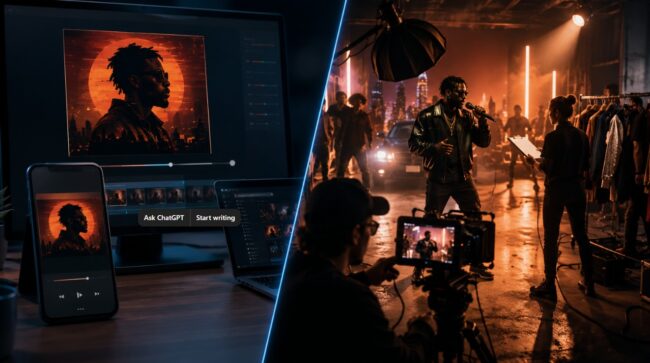
The easiest way to choose between the two is to define the purpose of the asset before deciding how to make it.
If a finished cover already communicates the artist, song, and visual direction clearly, a short animated version can work well for teasers, social posts, playlist promotion, and other supporting material. Tools such as KOOX AI make this kind of Image to video workflow practical when the goal is to add controlled movement to artwork that is already complete rather than create an entirely new visual concept.
A full shoot makes more sense when the video itself has something new to show. Performance, dance, characters, locations, wardrobe, and narrative scenes require a level of control that goes well beyond making artwork move.
That difference should guide the budget from the beginning.
Cover Motion Works Best as Supporting Content
Short cover animation is most useful when the artwork has already done the difficult creative work.
The image has a defined composition. The artist may already appear in it. Typography, colors, lighting, and other design elements have been approved. Animation then becomes an extension of that visual identity rather than a separate campaign concept.
That makes it suitable for material that needs to attract attention without competing with the main creative pieces.
A subtle push toward the artist, slight movement in the background, changing reflections, or gentle motion in existing elements may be enough to turn a static image into a useful short-form clip.
The point is not to show how much movement can be added. It is to make the image feel alive while keeping it recognizable.
A Full Shoot Has a Different Creative Role
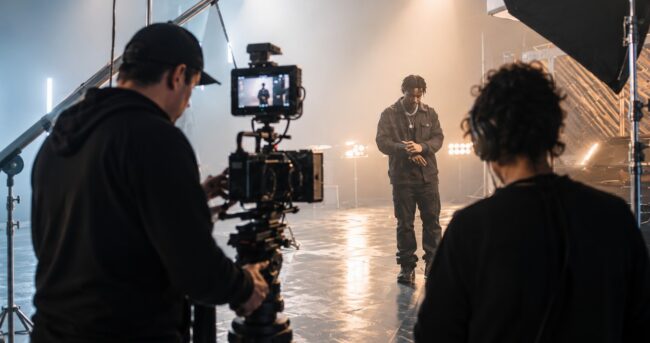
Traditional video production becomes valuable when the idea depends on what happens in front of the camera.
A performance video may need several takes, specific lighting, deliberate framing, and synchronization with the track. Narrative work can require actors, locations, props, continuity, and editing that develops a story over time. Even a relatively simple studio performance gives the artist control over gestures, movement, wardrobe, and camera presence.
Those elements cannot be reduced to animation without changing the idea itself.
A full shoot also gives the creative team more control over every frame. Directors and cinematographers can change angles, repeat performances, adjust lighting, and build scenes around the music rather than around the limitations of an existing image.
If the video is meant to become one of the defining visuals of the campaign, that additional control matters.
Compare the Two Based on the Final Use
The two approaches are easier to compare when production complexity is separated from creative purpose.
| Consideration | Short cover motion | Full video shoot |
| Starting point | Existing cover or promotional image | New concept and footage |
| Main purpose | Supporting short-form content | Major campaign video |
| Creative focus | Preserving artwork while adding movement | Performance, narrative and visual development |
| Production process | Animate, review and export | Plan, shoot, edit and approve |
| Flexibility | Built around an existing composition | High control over scenes and camera work |
| Best suited to | Teasers, loops, ads and social posts | Music videos, performances and narrative pieces |
The decision does not have to be permanent. The same campaign can use both approaches.
A full music video might provide the main visual statement, while animated artwork fills the spaces between larger posts. That is often more sensible than expecting one production method to solve every content requirement.
Protect the Elements People Already Recognize
The biggest risk with animated cover art is losing what made the original cover work.
Faces are especially sensitive. Small changes to eyes, mouth shape, skin texture, or expression can make an artist look noticeably different even when the rest of the image appears convincing.
Typography creates another problem. Letters that look perfectly sharp in the source image can distort or move when the surrounding artwork is animated. Logos, illustrated details, jewelry, hands, and patterned clothing can also behave unpredictably when too much motion is introduced.
For that reason, restrained animation usually works better for promotional material.
Start with the important elements of the cover and treat them as fixed points. Motion should happen around them rather than through them whenever possible.
If the artist’s face or the title changes significantly, the clip has lost more than the movement added.
Design for the Screen Where People Will See It
A video can look excellent on a desktop monitor and fail completely on a phone.
Spotify’s current Canvas guidelines are a useful example of how short music visuals are actually consumed. Canvas uses a vertical 9:16 format and lasts between three and eight seconds. Spotify also warns artists that the edges can be cropped on some phones and advises against rapid cuts or intense flashing visuals.
Those guidelines reinforce a broader rule for short promotional video: keep important information easy to identify on a small screen.
Meta makes a similar point for Reels advertising, recommending vertical 9:16 creative with important elements kept inside the platform’s safe zone.
Before approving a clip, view it on a phone at normal feed size. If the cover is difficult to recognize there, polishing it further on a large monitor will not solve the main problem.
Keep Motion Simple Before Making It Cinematic
Complex prompts and effects can be tempting because they make each new version feel different. They do not necessarily make it more useful.
Start with movement that makes sense inside the original image.
If the artwork shows an artist standing against a city background, a slight camera movement and subtle environmental motion may be enough. If the cover is a portrait, small movement in lighting, hair, smoke, fabric, or background elements can add depth without changing the subject.
Adding new crowds, dramatic weather, explosions, vehicles, or unrelated scenery turns a simple animation task into an attempt to create a new scene.
At that point, the original cover is no longer driving the creative direction.
If the concept needs that much new information, it may be a sign that the team needs different footage rather than stronger animation.
Make a Few Controlled Versions
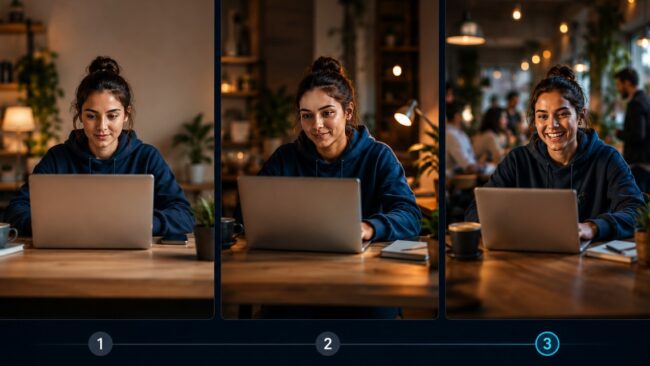
Generating more versions does not automatically produce a better result.
A more useful approach is to create two or three controlled variations. The first can use very subtle movement. The second can increase it slightly. If necessary, the third can change one specific element that did not work in the earlier versions.
Changing one thing at a time makes comparison easier.
If one version uses a different camera movement, new lighting, additional background action, and a stronger facial expression all at once, it becomes difficult to identify what improved the clip and what damaged it.
The same principle applies to approval. Showing the team two polished, usable alternatives is often more productive than presenting a folder of experiments ranging from almost static to visually chaotic.
Short-form content still benefits from creative discipline.
Know When Animation Has Reached Its Limit
There is a point where trying to make a still image do more becomes less efficient than shooting video.
Lip-sync is an obvious example. If accurate performance is central to the idea, filming the artist gives the team control over timing, expression, and movement. Choreography, interaction between several people, changing camera angles, and complex physical actions create similar problems.
Storytelling also changes the calculation.
A narrative may need a beginning, development, and conclusion across several shots. It may rely on an actor picking something up, entering a room, reacting to another character, or moving between locations. These are filmmaking decisions, not simply motion effects.
The more the concept depends on events rather than atmosphere, the stronger the argument for a proper shoot becomes.
Use the Budget Where the Audience Will Notice It
Not every visual asset needs the same level of investment.
The main music video may deserve a larger production because it will sit on YouTube, appear in press coverage, supply clips for social media, and become part of the long-term visual identity of the song.
A five-second teaser posted several days beforehand has a narrower job.
Spending full-production money on every small piece of campaign content can quickly become inefficient. At the same time, replacing every video idea with animated artwork can make the overall campaign feel repetitive.
A better approach is to separate major creative pieces from supporting content early in planning.
Put production resources into the videos where performance, story, and original footage add something important. Use existing visual assets where the audience mainly needs to recognize the song and artist quickly.
The Two Formats Work Better Together
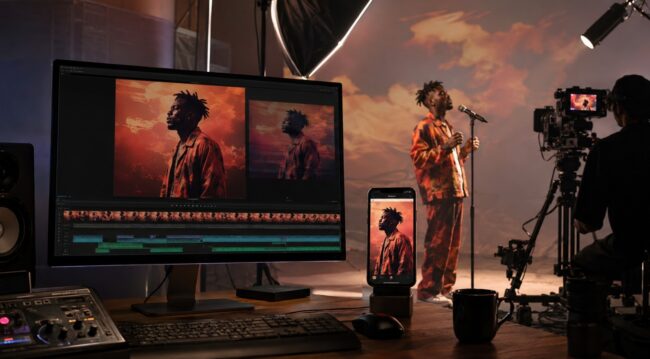
Short cover motion does not need to compete with traditional music video production.
They solve different problems.
Animated artwork can extend the life of a finished cover, provide quick visual material for social platforms, and create consistency across multiple promotional placements. A full shoot can build a visual world that goes beyond the artwork and gives the artist space to perform or tell a story.
The strongest campaigns can use both without confusing their roles.
If the cover already communicates what the audience needs to see, subtle motion may be enough. If the concept depends on actions, performance, locations, or narrative, invest in footage created for that purpose.
The decision becomes much easier once the team stops asking which format is better and starts asking what each individual video actually needs to achieve.