
People continue buying vinyl because physical albums create a different listening experience completely, indoors. Streaming feels convenient, although many listeners still prefer handling records and printed artwork regularly.
A growing record LP collection usually needs stronger shelves and careful room placement after some time. Vinyl reacts badly to heat, moisture, and rough handling during daily use around homes.
Some collectors focus on sound quality while others enjoy the visual side of album packaging. Different habits shape how collections expand across smaller rooms and larger spaces.
Choosing Stronger Storage Options
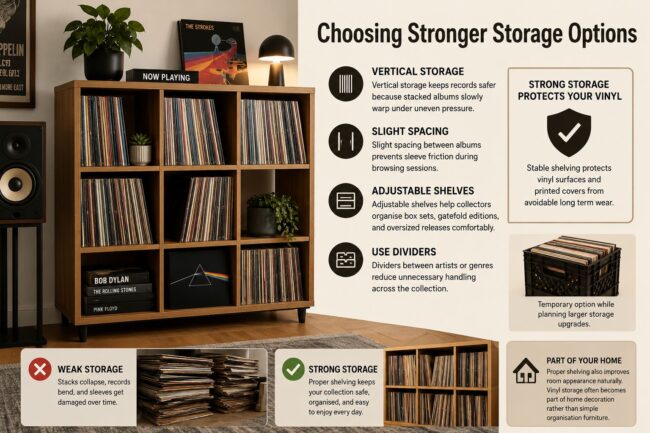
Weak shelves bend slowly once heavier albums begin stacking across smaller furniture surfaces indoors regularly. Organised records LP vinyl collections require enough airflow and balanced support around every stored album carefully. Tight storage spaces create sleeve friction and pressure damage during repeated browsing sessions throughout busy weeks. Wooden cube shelving remains popular because albums fit naturally without awkward unused spaces everywhere nearby. Some collectors use plastic crates temporarily while planning larger storage upgrades later at home. Stable shelving protects vinyl surfaces and printed covers from avoidable long term wear.
Many collections start small and expand unexpectedly within a year. A single crate quickly turns into overflowing stacks beside desks, speakers, and living room corners. Heavy records place more strain on furniture than people usually expect.
Several storage habits make long term organisation easier:
- Vertical storage keeps records safer because stacked albums slowly warp under uneven pressure.
- Slight spacing between albums prevents sleeve friction during browsing sessions.
- Adjustable shelves help collectors organise box sets, gatefold editions, and oversized releases more comfortably.
- Dividers between artists or genres reduce unnecessary handling across the collection.
Proper shelving also improves room appearance naturally. Vinyl storage often becomes part of home decoration rather than simple organisation furniture.
Why Record Weight Matters
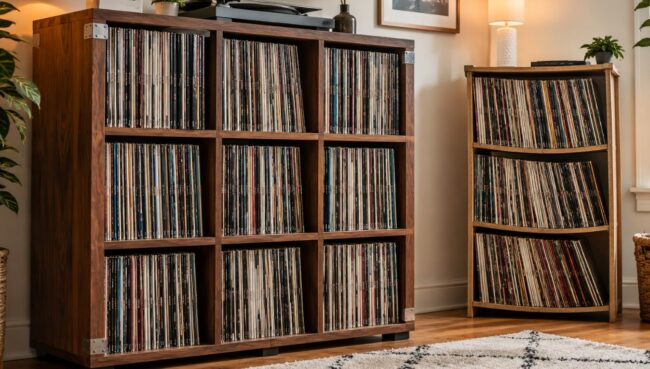
Many beginners underestimate how heavy vinyl becomes once collections pass one hundred albums. Smaller bookshelves sometimes bow slowly in the middle after carrying constant pressure for months. Cheap particle board furniture weakens especially fast in humid environments.
Collectors often notice problems gradually:
- Shelf panels begin leaning slightly downward.
- Corners loosen near screws or support joints.
- Records start tilting unevenly toward one side.
- Tight pressure becomes noticeable while removing albums.
Strong cube shelving remains popular because it distributes weight evenly while keeping records upright. Some collectors even reinforce shelves using metal brackets once collections become larger.
Cleaning Before Every Playback
Dust inside grooves affects playback quality faster than many beginners usually expect after collecting vinyl recently. Simple cleaning tools often improve sound without requiring expensive maintenance equipment or complicated routines indoors. Every record LP should stay inside clean sleeves whenever playback sessions finally finish each evening afterward.
Antistatic brushes help remove surface debris before particles settle deeper into grooves permanently later. Dirty stylus tips also create playback distortion while increasing unnecessary wear across delicate vinyl surfaces. Basic cleaning habits protect collections while improving overall listening quality during regular use.
Many listeners notice crackling noise long before visible dirt appears on record surfaces. Even clean homes collect airborne dust constantly throughout the day.
Simple routines often protect albums better than expensive equipment alone. Most collectors eventually develop small habits that become automatic before every listening session.
Useful Cleaning Habits
A few regular habits usually keep playback cleaner and smoother over time:
- Brush records lightly before lowering the stylus.
- Return albums into sleeves immediately after playback finishes.
- Keep the turntable cover closed whenever possible.
- Clean stylus tips because residue slowly builds after repeated listening.
Second hand records often benefit from deeper cleaning because older albums collect smoke residue, fingerprints, and dirt over decades. Gentle wet cleaning sometimes restores surprisingly clear sound from neglected records.
Archival preservation guides also recommend returning records into sleeves immediately after playback to reduce unnecessary exposure to air and light.
Understanding Pressing Differences
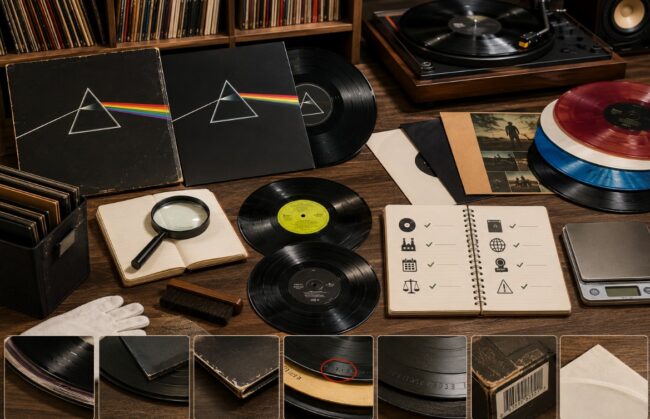
Original releases sometimes sound different because mastering methods changed between older and modern pressings frequently. Collectors compare label variations, catalogue numbers, and sleeve details before buying expensive albums online today. Some records LP vinyl reissues contain remastered audio, while others closely follow original production versions instead. Coloured vinyl attracts attention visually, although pressing quality still matters more than appearance overall during playback.
Limited editions often increase in price quickly because collector demand spreads across online marketplaces regularly. Understanding pressing details helps buyers avoid confusion during future purchases and trades.
Two copies of the same album may sound surprisingly different despite identical artwork. Pressing plants, mastering engineers, and manufacturing years all affect playback quality in subtle ways.
Older pressings often attract collectors searching for warmer analogue sound. Modern reissues sometimes improve clarity, although remastering quality varies between labels.
What Collectors Usually Check
Experienced buyers often inspect several details before purchasing expensive records online:
- Matrix numbers near the label area.
- Country of manufacture and pressing plant.
- Sleeve condition and original inserts.
- Signs of unofficial or counterfeit releases.
Limited coloured editions remain visually popular, although many collectors still prioritise sound quality above appearance alone.
Room Conditions Affect Records
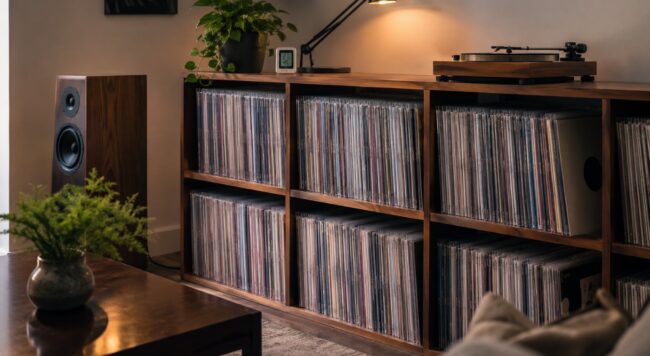
Warm rooms slowly warp vinyl surfaces even when visible damage seems completely absent at first glance. Direct sunlight fades artwork while weakening sleeve materials over longer storage periods inside homes quietly. Safe record LP storage usually depends on cooler temperatures and balanced humidity throughout changing seasons yearly. Basements sometimes feel convenient, but hidden moisture eventually affects cardboard sleeves and paper inserts badly. Interior rooms provide steadier conditions compared with attics or window side shelving setups around houses. Stable environments help records remain cleaner and easier to preserve over time.
Environmental conditions affect vinyl slowly but consistently. Many collectors only notice problems after sleeves begin fading or records develop slight edge warping.
Experts commonly recommend temperatures around 18 to 21°C with humidity near 40 to 50 percent for safer long term storage conditions.
Common Storage Mistakes
Certain room placement mistakes continue damaging collections unnecessarily:
- Shelves placed beside radiators expose records to steady heat daily.
- Direct sunlight fades artwork surprisingly fast.
- Attics experience dangerous seasonal temperature swings.
- Damp basements encourage mould growth around sleeves.
Humidity changes also increase static buildup, which attracts dust directly into record grooves. Stable rooms usually preserve collections far better over long periods.
Vinyl as Part of Interior Design
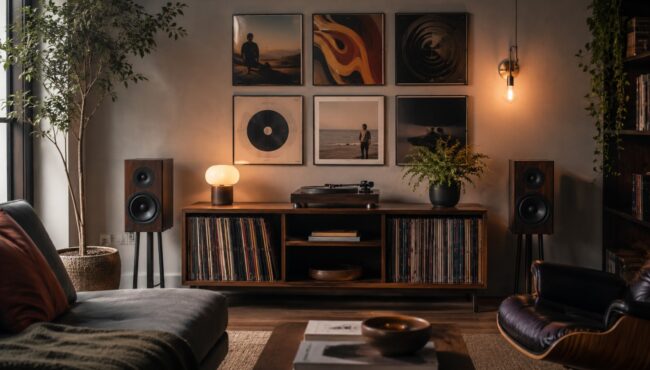
Modern collectors often treat vinyl storage as part of room design instead of hiding records completely. Open shelving displays album artwork naturally while creating a more personal atmosphere around listening spaces.
Several design trends appear regularly in vinyl focused rooms:
- Low wooden cabinets with built in turntable space.
- Minimal cube shelving beside speakers.
- Framed album covers displayed like artwork.
- Dedicated listening corners with softer lighting.
Interior design magazines increasingly feature vinyl collections because records combine music, artwork, and furniture styling naturally inside modern homes.
Collecting Becomes Personal
Streaming offers convenience, although vinyl creates a slower and more intentional experience for many listeners. Choosing records, cleaning surfaces, and placing the stylus carefully becomes part of the ritual itself.
Some collectors chase rare pressings and expensive editions. Others simply enjoy finding old albums in local shops during weekends. Collections often reflect personality more clearly than digital playlists because every purchased record usually carries a memory connected to a certain time, place, or mood.
That emotional connection continues pushing vinyl culture forward even while streaming dominates modern music listening.