
Most people focus on mattress quality when trying to improve sleep, but the bed frame beneath it deserves equal attention. Frame design affects body support, ease of movement, and the overall feel of a bedroom for daily living.
Height, material, headboard style, and structural build all contribute to how restful a night actually is. Getting this choice right means looking at physical function and room layout together, not separately.
Frame Height and Sleep Comfort

Bed height is one of those details that seems minor until it becomes a daily inconvenience. A frame set too low puts unnecessary strain on the knees when standing up. One that sits too high can restrict circulation during sleep, particularly in the lower legs.
Research generally points to a mattress height between 24 and 30 inches from the floor as the most practical range for adults. Shoppers exploring affordable Miami beds furniture will find frame options across this height range, suited to different body types and room proportions. This window supports natural movement in and out of bed, and it proves especially beneficial for people with joint sensitivity or limited mobility.
Under-Bed Clearance
Frames that offer at least 12 inches of clearance underneath open up useful storage space. Using that space well reduces clutter in the rest of the room, which is more important than it may seem. Sleep research has consistently linked visual clutter in the bedroom to higher pre-sleep anxiety and longer time falling asleep.
Material and Structural Stability
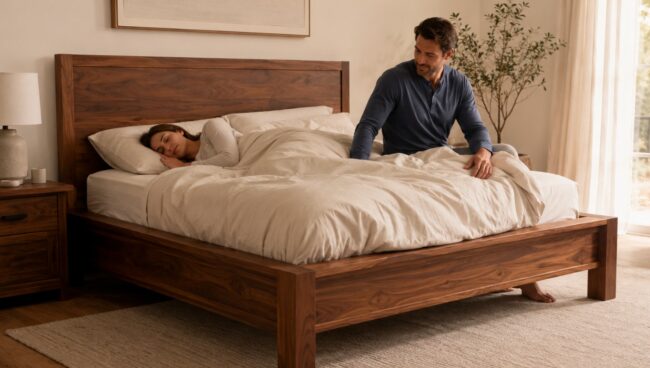
Frame material shapes two things that directly affect sleep: how well the frame holds up over time and how effectively it supports the mattress. Solid wood absorbs motion well, making it a practical choice for light sleepers or shared beds. Metal frames offer comparable durability but tend to transfer movement more readily between sleepers.
Poor joinery is the most common reason frames develop squeaks, and these noises are one of the most reliable ways to fragment otherwise solid sleep. Reinforced slats, tight hardware, and well-fitted joints eliminate that problem before it starts. Prioritizing construction quality over decorative finish is always the sounder investment; a frame that looks good but loosens within a year creates more stress than comfort.
Headboards and Their Function
Headboards tend to get treated as a finishing touch, but they contribute more practically than that. A padded headboard gives genuine back support for reading or working in bed. A solid headboard also provides a degree of insulation against exterior or poorly finished walls, which becomes relevant in older homes or in climates with significant temperature swings.
Headboard Height and Room Proportion
Tall headboards pull the eye upward and lend a sense of vertical space to rooms with standard ceiling heights. Lower headboards create a more grounded, horizontal feeling that suits minimal or contemporary bedroom styles.
There is no objectively better option here. The right choice ties back to ceiling height, the scale of surrounding furniture, and the visual balance the room already has.
Spatial Flow and Room Layout
A frame’s footprint has a direct impact on how much usable floor space a bedroom retains. Wide platform designs and frames with extended side rails quickly eat into walkable area, making even a reasonably sized room feel tight. In compact bedrooms, frame dimensions relative to the room’s square footage deserve serious thought before purchase.
Raised frames with visible legs allow light to travel underneath the bed, reducing the visual weight of a large piece of furniture. Slimmer profiles achieve a similar effect, keeping the room feeling open rather than dominated by a single piece.
Storage Beds and Layout Trade-Offs
Lift-up base frames and built-in drawer designs solve real storage problems in rooms without adequate closet space. The trade-off is a bulkier visual presence and limited flexibility in rearranging the room later. For bedrooms that serve multiple functions, that trade-off is worth thinking through carefully before committing.
Slat Design and Mattress Performance
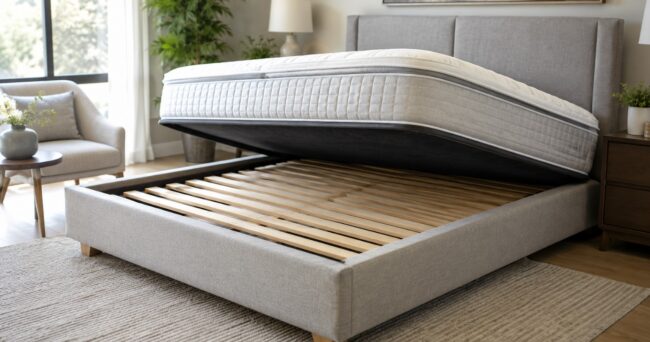
The slat configuration under a mattress has a measurable effect on how that mattress actually performs. Slats spaced more than three inches apart allow the mattress surface to bow between supports, which accelerates wear and creates uneven pressure distribution during sleep.
A solid platform base or closely spaced slats keep weight evenly distributed across the full surface. Memory foam and latex mattresses are particularly sensitive to their support; both require consistent, firm support beneath them to deliver the pressure relief they are designed to provide.
Frame Size Relative to Sleepers, Not Just the Room
Choosing frame size usually starts with measuring the bedroom, but the people sleeping in the bed matter just as much. Couples sharing a queen frame have roughly 30 inches of personal width each, which is less than a single twin bed provides. For two adults who move during the night, a king frame reduces sleep disturbances noticeably, provided the room can absorb the larger footprint without sacrificing walking paths.
Individual sleeping habits deserve attention here too. Side sleepers who draw their knees up need more diagonal space than back sleepers. Taller individuals should look at frame length before anything else, since standard frames leave people over six feet tall with their feet pressed against a footboard. Frames without a footboard, or extended-length designs, solve that problem cleanly.
Pets and children who join the bed at night change the calculation as well. A frame that seemed generous for two adults becomes crowded quickly, and the added weight load makes structural quality even more important. Thinking through who actually uses the bed, and how, prevents the common mistake of buying a frame that fits the room perfectly but never quite fits the sleepers themselves.
Conclusion
Bed frame design touches nearly every dimension of sleep quality and bedroom function. The height determines physical ease of use, the material affects how well motion is absorbed, and the footprint shapes how a room feels to move through. Treating the frame as an afterthought often means compromising on sleep without realizing why. A well-chosen frame supports the mattress, suits the room, and holds its build quality long enough to justify the investment.