
Weather shifts constantly, and each turn tests a stable in new ways. Summer bakes the roof while winter cracks the pipes. Many owners believe strong walls settle the matter, yet real safety comes from airflow, drainage, fire planning, and honest upkeep pulling in the same direction. This guide sorts out what genuinely protects horses all year, giving caretakers clear points to weigh before making decisions.
Ventilation Matters More Than Most People Think
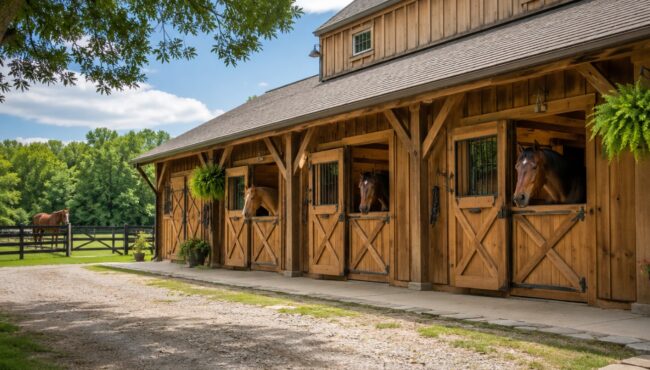
Clean airflow keeps lungs healthy, and that matters most when humidity climbs. Trapped air holds ammonia from urine, which quietly damages breathing over the weeks. A thoughtfully built barn for horses relies on ridge vents, cupolas, and open windows to move air gently, never harshly. Picking a structure with airflow planned into its bones spares animals from damp misery and keeps stalls livable as the thermometer swings.
Moisture control follows close behind. Without steady circulation, damp settles into timber, rots the grain, and feeds mold. Good ventilation cools bodies in July and blocks condensation in January. Caretakers should confirm that vents stay open, brushing away dust, cobwebs, and stray nests as the seasons pass.
Choosing a Structure Built for Local Weather
Where a stable stands decides much of how it should be built. A sound design carries wind, bears snow, and sheds heavy rain without buckling as years stack up. Matching materials to the local forecast guards animals and trims future repair bills. Solid framing, a capable roof, and tough siding give shelter its true spine, holding firm through decade after decade of changing skies.
Emergency access also matters. Fire engines, trailers, and veterinary vehicles need a clear route to the barn in every season. Gates should open wide enough for equipment, while driveways must remain firm during rain, snow, and thawing conditions. Posting the property address clearly and keeping emergency numbers near the entrance can save time when quick action matters.
Roofing and Drainage
Water quietly wrecks more stables than almost anything else. A pitched roof throws off rain and snow before their weight turns risky. Gutters carry that runoff clear of the foundation, so stall floors stay dry underfoot.
Standing water breeds mud, and mud breeds bacteria while softening hooves. Grading the ground around the walls pushes runoff downhill rather than letting it gather by the doors.
Fire Prevention Deserves Serious Attention
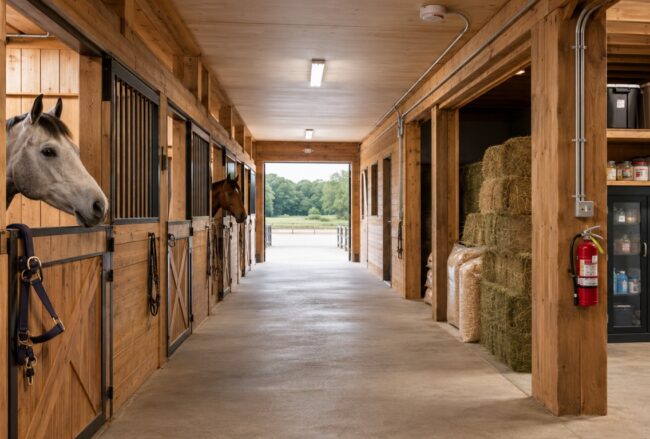
Hay, bedding, and timber fill most barns, which makes them tinderboxes waiting on a spark. One ember can race through dry stores in minutes. Reports point to thousands of stable fires each year across rural areas, and the losses run heartbreakingly.
Smart owners keep hay stored apart from the animals whenever the layout allows. Wiring belongs inside protective conduit, safe from damp and inquisitive muzzles. Extinguishers, smoke alarms, and unobstructed exits give caretakers those vital first seconds. Routine checks flag frayed cords and strained circuits long before flames appear.
Feed rooms need similar discipline. Grain should stay in sealed containers that resist rodents and moisture, while medicines, chemicals, and sharp tools belong in locked cabinets. Regular checks for spoiled feed, chewed wiring, or leaking containers reduce risks that may otherwise go unnoticed during busy weeks.
Owners should also prepare a simple evacuation plan. Halters and lead ropes must stay where they can be reached quickly, and every caretaker should know which exits to use. Practicing the route occasionally helps people respond calmly instead of improvising during smoke, flooding, storms, or structural damage.
Seasonal Upkeep That Keeps Everything Working
Care is the line between a safe, stable one and one drifting toward failure. Minor faults turn costly the moment you brush aside early signals.
Spring and Summer Tasks
Heat draws pests, so screens and fly control move to the top of the list. A close look at the roof after winter uncovers slipped shingles or leaks hiding above. Clearing the gutters lets rain run off cleanly once the storms roll back in.
Fall and Winter Tasks
Cold snaps demand pipe protection and dependable water at all hours. Wrapping exposed plumbing keeps troughs flowing when temperatures plunge. Testing heaters, clearing snow loads, and sealing drafty gaps shield animals from cutting wind.
Safe Interiors Protect Daily Movement
What sits inside shapes injury rates far more than owners tend to expect. Walls left smooth and free of jutting nails and spare hides from cuts and scrapes. Stall doors ought to latch tight yet swing open fast when trouble strikes.
Flooring earns equal thought. Rubber mats ease joints and add grip where surfaces turn slick. Aisles swept clear of tools, buckets, and clutter cut tripping risks for handlers and horses alike.
Lighting and Visibility
Bright, even light lets caretakers catch wounds, pests, and hazards before they worsen. Sunlight through windows lifts spirits and saves the power bill. Sealed fixtures stand up to the dust and damp that farm buildings collect.
Backup lighting earns its keep during outages or midnight emergencies. Motion-triggered lamps outside sharpen security and wave off prowlers once darkness settles.
Conclusion
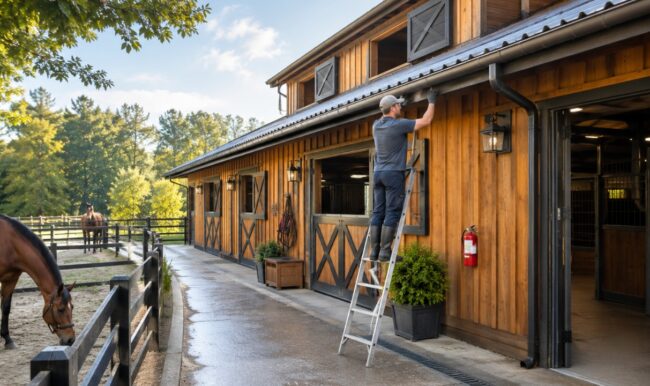
Guarding a stable through the seasons weds clever design to patient, repeated care. Airflow, drainage, fire readiness, and well-planned interiors each carry weight none can shoulder alone. Owners who inspect often and bend with the weather hand their animals steady protection. A trustworthy shelter grows from daily attention, not chance, and that effort pays back in calmer, healthier, safer horses for many years.