
Nothing is more terrifying to a music producer than a blank project screen. You open your Digital Audio Workstation (DAW), stare at the empty timeline, and realize you have access to unlimited synthesizers, millions of drum samples, and infinite combinations of effects. Instead of feeling inspired, your brain short-circuits. You waste hours playing one kick drum sample after another, tweaking a synthesizer patch until your ears ring and eyes blur, and ultimately shut down without locking in a single chord. The endless paradox of choice has killed your momentum before you even played a note.
This cycle of creative paralysis is the number one reason producers abandon projects. To actually finish music, you have to stop treating every studio session like a chaotic sandbox and start treating it like a focused discipline. When developing a productive creative workflow, the goal is to remove friction, limit your choices, and hack your brain’s natural rhythms to stay in a positive state of flow.
Here is exactly how to stop endlessly tweaking and start consistently finishing tracks.
DAW Templates: Bypassing Setup Paralysis
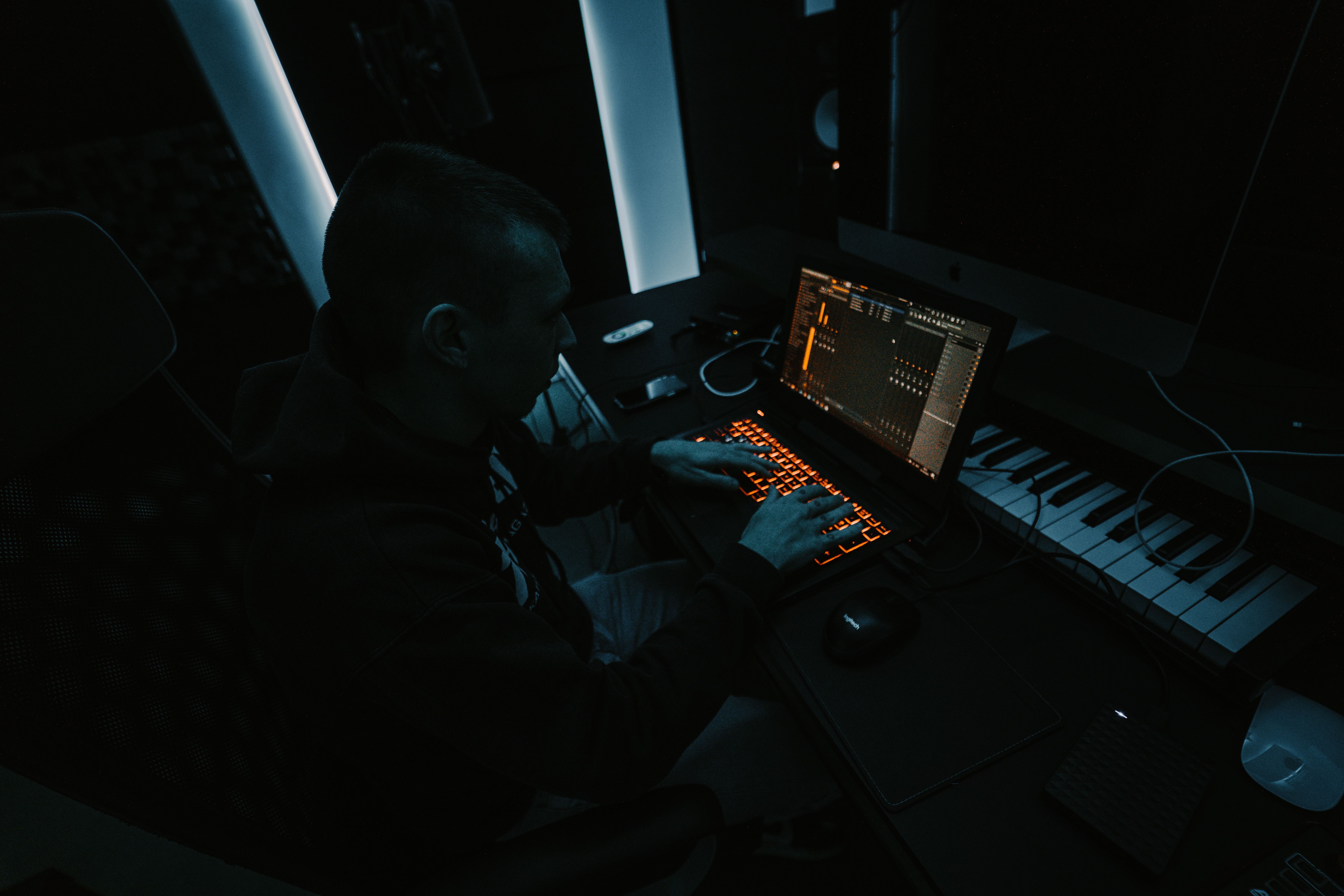
The most vulnerable moment in your creative process is the first ten minutes. If you have an incredible melody in your head but you have to spend five minutes routing audio channels, assigning MIDI inputs, and finding a decent piano patch, that melody will evaporate.
You must eliminate the “housekeeping” phase of music production by using purpose-driven DAW templates. A template is a pre-configured project file that loads instantly, allowing you to bypass the technical setup and immediately begin the creative execution. Instead of building one massive, bloated template, build three distinct templates tailored to specific phases of the production lifecycle.
The Production Template (The Blank Canvas)
This template is designed strictly for writing, arranging, and capturing ideas at lightning speed. It should be lightweight, color-coded, and ready to record the moment you hit the spacebar.
- Pre-Loaded Drum Racks: Load your favorite go-to kick, snare, and hi-hat samples into a drum rack. You can always swap them out later, but you need an immediate rhythm that doesn’t fight with you to write to.
- Initialized Synths: Keep an instance of your favorite workhorse synthesizer (like Serum or Vital) loaded on a track, set to an initialized sawtooth, piano, or some other preferred patch.
- Pre-Routed Audio Tracks: If you record external instruments like guitars or vocals, have those audio tracks already created, input-routed, and armed with a basic equalizer and compressor so you can plug in and play. Keep it simple; keep it effective.
The Mixing Template (The Mixing Desk)
When the writing is done, the creative brain needs to shut off and the analytical brain needs to take over for a bit. Your mixing template should resemble a traditional analog console, designed for routing, leveling, and frequency carving.
- Pre-Assigned Busses: Have dedicated stereo busses already created for Drums, Bass, Guitars, Synths, and Vocals.
- Effect Sends (Auxiliaries): Pre-load one or two preferred reverbs and delays on your auxiliary tracks.
- Bypassed EQs: Place your go-to equalizer plugin on every single channel, left in the “bypassed” (off) state. When you spot a muddy frequency, you don’t have to dig through a plugin menu; you just turn the EQ on and start carving.
The Mastering Template (The Final Polish)
Mastering requires an entirely different mindset and acoustic perspective. Trying to master a track inside the massive, cluttered production project is a recipe for disaster.
- A Single Audio Track: Your mastering template should contain only one audio track where you drop your final, exported stereo mixdown.
- The Master Chain: Pre-load a mid/side equalizer, a gentle bus compressor, a multi-band dynamics tool, and a true-peak brickwall limiter.
- Metering Tools: Keep your LUFS (Loudness Units relative to Full Scale) meter and phase correlation meters open by default so you can visually verify the health and loudness of your final track.
The Power of Creative Constraints (Why Less is More)

The human brain is a massive pattern-recognition engine, but it struggles under the weight of infinite choice. If you tell a producer, “Write a song about anything using any instrument,” they will likely freeze. If you tell a producer, “Write a tense, two-minute cinematic chase scene using only a cello and a distorted drum machine,” they will immediately start generating ideas.
This is the psychological concept of the “sweet spot of constraint.”
When you remove options, you remove the cognitive load of decision-making. Psychological studies in creative behavior consistently show that creativity does not flourish in open space; it flourishes when it has a wall to push against. The brain’s large-scale neural networks are forced to cooperate to solve the specific puzzle in front of them, rather than scattering their attention across endless possibilities.
If you are stuck in a creative rut, use music-making as a practice drill by applying brutal, self-imposed constraints.
Constraint Drill 1: The 24-Hour Time Limit
Nothing forces a decision like a ticking clock. Challenge yourself to write, produce, mix, and export a track in exactly 24 hours. Scarcity clarifies. You will no longer have the luxury of spending two hours auditioning snare drums. You will be forced to trust your gut, commit to a sound, and move forward.
Constraint Drill 2: The Single Instrument Limit
Limit yourself to using only one synthesizer plugin for the entire track. You must use that single synthesizer to build the kick drum, the bassline, the atmospheric pads, and the lead melody. This forces you to dive deep into sound design and learn the mechanics of your tools rather than just mindlessly scrolling through preset banks.
Constraint Drill 3: The Structural Restriction
Take a different song, especially from a different genre than you normally work in, and break down the song structure. Then, force yourself to write a song that uses that same song structure down to the measure. By restricting the architecture of the song, you force your brain to find new ways to keep the listener engaged using volume, texture, and automation. You also teach yourself how to push against constraints.
Finding Your When: The “Inspiration Paradox”

When producers get stuck on a track, the instinct is to push harder – to sit in the studio chair, drink another coffee, and force the creativity out. But cognitive psychology dictates that brute-forcing creativity is often the worst possible approach.
To break out of a creative rut, you must understand how your circadian rhythm affects your brain. In 2011, psychological researchers Mareike Wieth and Rose Zacks conducted a groundbreaking study on the time of day and problem-solving. They discovered what is now known as the “Inspiration Paradox.”
Wieth and Zacks found that the human brain tackles different types of problems better at different times of the day.
- Analytical Tasks: Tasks that require intense focus, logic, and math (like mixing a track, balancing EQ levels, or organizing files) are performed best during your “optimal” time of day – when you feel most alert and awake.
- Creative (Insight) Tasks: Tasks that require generating novel ideas, writing melodies, and finding unique chord progressions are actually performed best during your “non-optimal” time of day – when you feel slightly groggy or fatigued.
Why? Because during your non-optimal time of day, your brain’s inhibitory control mechanisms are weakened. Your mind is prone to wandering. It stops filtering out “distracting” thoughts and allows seemingly unrelated ideas to crash into each other, leading to sudden, serendipitous creative breakthroughs.
If you are a “night owl” like me who usually works late, try waking up early and writing a melody while you are still groggy and drinking your first cup of coffee or doing this closer to the point when you are going to fall asleep. If you are a “morning lark,” try writing your synth parts late at night when your focus is slipping. Save the highly technical, analytical mixing phase for your peak alert hours. Hacking your natural biological rhythm ensures you are fighting with your brain, not against it.
External Stimuli and the Power of Micro-Wins
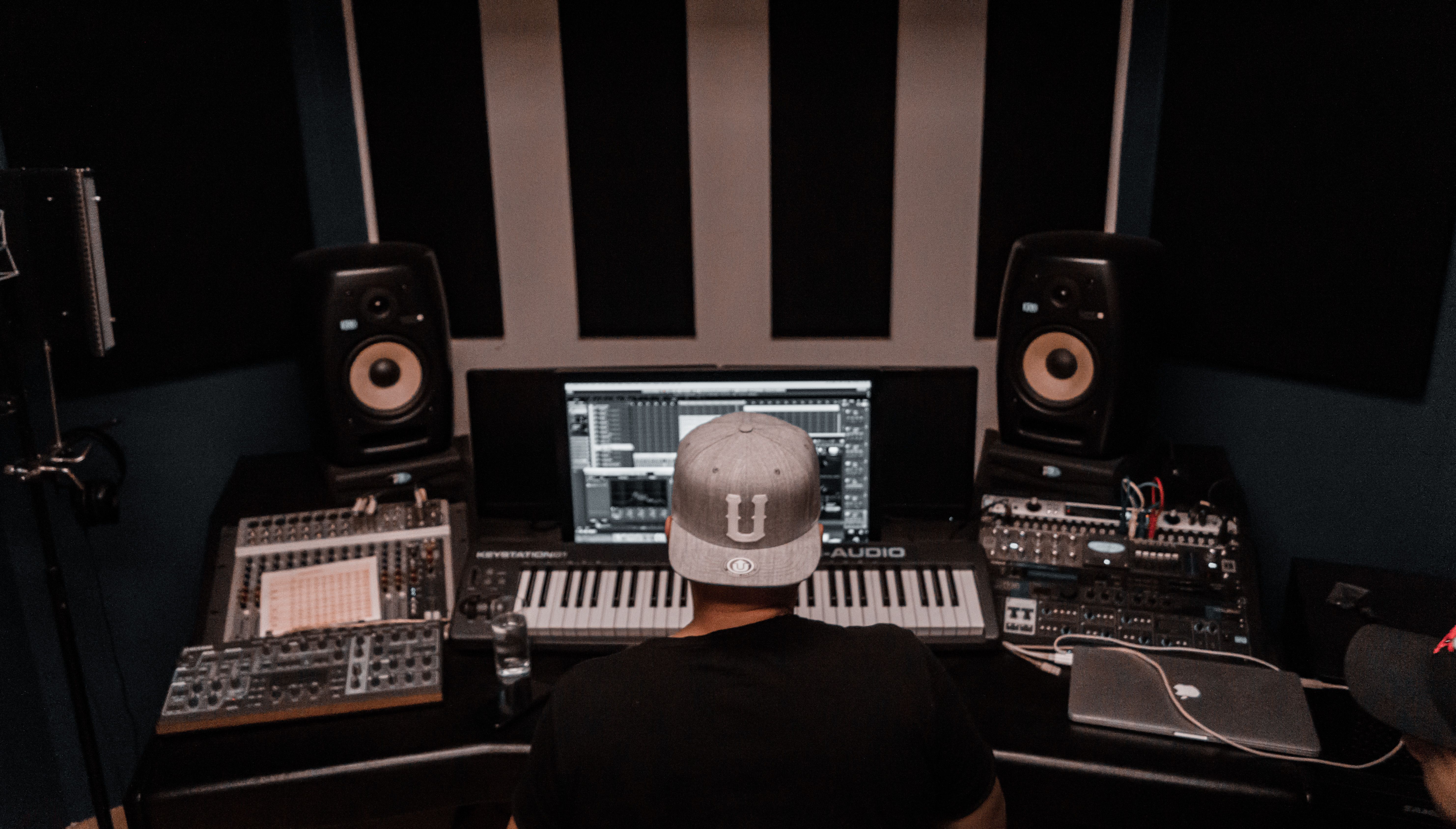
You cannot generate the output of great art if you do not have the input of great experiences. If you spend fourteen hours a day staring at a glowing grid inside a dark room, your creative well will dry up.
When the workflow stalls, you must break the physical routine to seek external stimuli. Step away from the computer. Go to a live show and feel how the sub-bass of a heavy track physically hits your chest in a crowd. Take a walk outside without headphones and listen to the chaotic, un-quantized rhythm of a city street or the wind cutting through a forest. Your brain needs to absorb the physical world to successfully emulate it in the digital one.
Finally, you must protect your creative momentum by breaking massive projects down into manageable, psychological micro-wins.
Finishing a song is an incredibly daunting task. If your to-do list says “Finish Track,” you will likely procrastinate. Instead, break that massive goal into a series of quick hits: “Write an 8-bar bassline,” “EQ the vocal track,” or “Automate the filter on the intro synth.” You can achieve a micro-win in twenty minutes. String enough of those micro-wins together, and suddenly the song is complete.
The ultimate goal of a productive workflow is completion. A good, finished song that you can export, share, and learn from is better than a perfect, unfinished loop rotting on your hard drive any day of the week.
Instead of auditioning kick drums, set a timer, embrace the constraints, trust your groggy brain, and finish the track.