
Outdoor lighting can make a garden safer, more welcoming, and more useful after sunset. Yet choosing the right system is not simply a matter of finding attractive fixtures. The power source affects where lights can be installed, how consistently they perform, how much maintenance they need, and how easily the layout can change later.
Low-voltage and solar lighting are two popular choices for residential landscapes. Neither is automatically better. Low-voltage systems offer dependable output and control, while solar fixtures provide cable-free installation. Understanding those differences makes it easier to spend wisely.
How the Two Systems Work
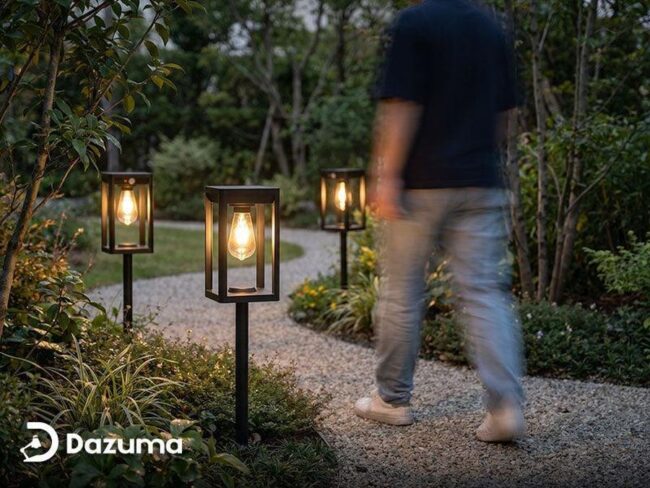
A low-voltage landscape system uses a transformer to reduce household voltage before supplying power to outdoor fixtures through buried or concealed cable. Several lights can share the same circuit, allowing a planned arrangement along paths, planting beds, patios, or walls. Homeowners comparing permanent garden options can explore Outdoor Low Voltage Lights to see how different fixture types can work within one coordinated layout.
Solar lights operate independently. A photovoltaic panel charges an internal battery during the day, and stored energy powers the light after dark. Some fixtures have a panel built into the top, while others use a separate panel that can be positioned in a sunnier location. There is no power cable running back to the house, so each fixture can be placed as an individual unit.
Installation: Planning Versus Flexibility
Solar lighting is often the easier option for a quick improvement. A stake light can be pressed into suitable soil, tested after dark, and moved if the effect is not right. This flexibility is valuable in rented homes, evolving gardens, and areas where digging would disturb established planting. It also makes seasonal lighting changes straightforward.
A low-voltage system requires more preparation. The transformer needs an appropriate location, cable routes must be planned, and connections need protection from outdoor conditions. Installation may be manageable for an experienced homeowner, but a larger or more complex project can benefit from a qualified professional. The extra planning is worthwhile when the goal is a stable, long-term lighting scheme.
Reliability Through the Seasons
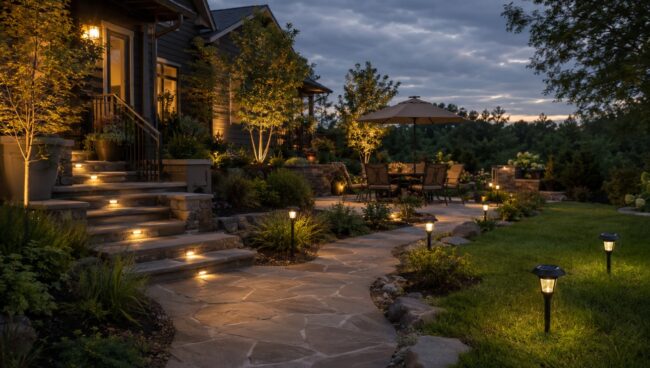
Low-voltage fixtures receive a steady power supply, so their performance is generally predictable regardless of recent cloud cover. That consistency matters around entrance steps, frequently used paths, outdoor dining areas, and other places where light has a practical role. Timers, photocells, or compatible smart controls can also create a dependable operating schedule.
Solar performance depends on panel position, daylight hours, weather, battery condition, and the amount of shade cast by buildings or trees. A fixture that performs well in summer may run for fewer hours during a cloudy winter. Before installation, observe the proposed location throughout the day rather than assuming that a bright garden is sunny everywhere. For sites with good exposure and modest illumination needs, Solar Outdoor Lighting can provide a practical way to add light without extending wiring.
Brightness and Visual Control
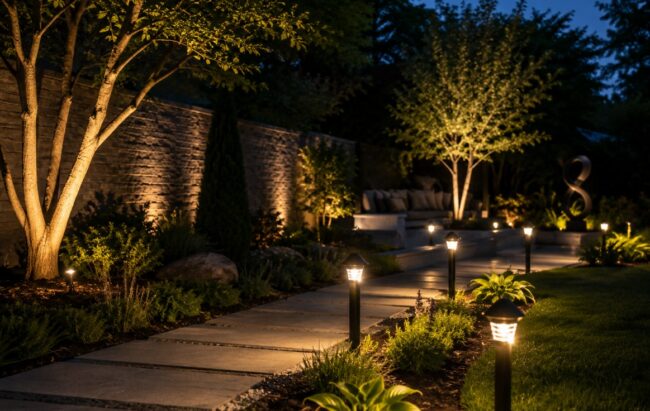
Low-voltage lighting is usually the stronger choice when a design depends on consistent brightness or a carefully balanced group of fixtures. It can support layered effects: path lights for movement, uplights for trees, wall washing for texture, and focused accents for sculptures or planting. Because the fixtures share a controlled power source, the result can feel cohesive rather than accidental.
Solar fixtures are well suited to gentle guidance and decorative accents. They can mark the edge of a path, add a soft glow among plants, or bring attention to a distant corner. Product quality varies, so check expected light output, charging requirements, and estimated operating time. More brightness is not always desirable; excessive glare can make a small garden less comfortable and obscure the softer details of the landscape.
Choose According to the Job
Start by separating essential lighting from optional lighting. Steps, changes in level, gates, and primary routes need dependable visibility. Low-voltage fixtures are often better for these core zones, especially when the area is shaded or used throughout the year. Decorative containers, temporary seating areas, secondary paths, and remote garden features may be excellent candidates for solar fixtures.
Maintenance and Long-Term Value
Both systems need occasional attention. Solar panels should be kept clean and clear of leaves, while rechargeable batteries may eventually need replacement. Low-voltage systems require checks for damaged cable, loose connections, shifted fixtures, or vegetation blocking the beam. Choosing weather-suitable materials and accessible installation points makes either system easier to maintain.
A Mixed System Can Be the Best Answer
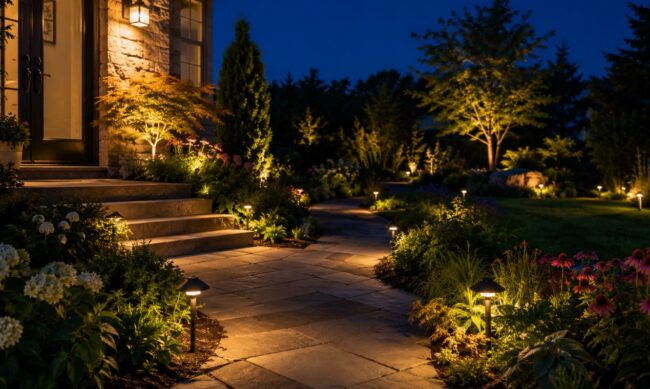
Many gardens do not need an all-or-nothing choice. Low-voltage lighting can form the dependable backbone around the house, entrance, steps, and main paths. Solar fixtures can then add flexible accents in sunnier beds or distant locations where laying cable would be inconvenient. Keeping the color temperature and fixture style reasonably consistent helps the two systems look intentional together.
The best outdoor lighting plan begins with the garden’s actual conditions. Map the areas that need reliable illumination, note where direct sunlight is available, and decide which features deserve emphasis. Once every light has a clear purpose, it becomes much easier to choose between low-voltage power, solar convenience, or a thoughtful combination of both.